Bokksu vs Sakuraco vs TokyoTreat: Japanese Snack Boxes

Three subscription services dominate English-language searches for Japanese snack boxes: Bokksu, Sakuraco, and TokyoTreat. All three ship from Japan, all three charge somewhere around $33 a month on their longest plans, and all three describe themselves as a monthly taste of Japan. The differences that actually decide which one suits you are less obvious: what counts as an “item,” how much lands on top of the sticker price at checkout, and whether you want traditional confectionery or the kind of snacks sold at a Japanese convenience store. This comparison uses figures published by each company, checked on 26 July 2026.
Verdict
Price is not what separates these three: on the per-box rates published on 26 July 2026 they sit within $1.50 of each other on comparable plans, so pick by what you want to eat.
- Bokksu — traditional confectionery, the most items per box (22 snacks, candies and tea) and a monthly tea pairing, but its US shipping is only calculated at checkout.
- Sakuraco — the same traditional style plus a piece of Japanese homeware, with the landed cost visible up front: $32.50 per box on the 12-month plan, $14.99 shipping and $4.29 in US tax and duties, or $51.78 delivered.
- TokyoTreat — Japan-exclusive KitKat flavors, chips, instant noodles and a seasonal drink; 12 to 15 items because they are full-sized.
Sakuraco and TokyoTreat are both ICHIGO brands with identical plan prices and identical shipping and duty figures, so that choice is purely about the snacks.
How to choose
The sticker price is not the price
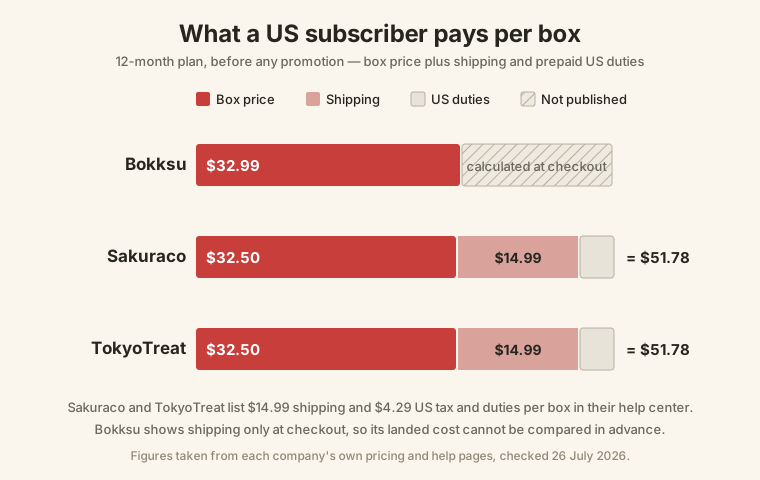
Every one of these services quotes a per-box price and then adds shipping at checkout. For a US subscriber that gap is large enough to change the ranking.
Sakuraco and TokyoTreat publish their numbers openly: a shipping fee of $14.99 per box, plus $4.29 per box in US tax and duties, listed in the pricing update their help center issued for April 2026. Those duties exist because the US ended the de minimis exemption, which had let parcels under $800 enter duty-free — both brands now collect the charge upfront so boxes clear customs without a surprise bill on the doorstep.
Bokksu takes a different approach. Its plan page states only that the total is “plus shipping fee calculated at checkout,” and no flat rate appears on the site or in its public FAQ. That does not mean Bokksu is more expensive; it means its landed cost cannot be compared in advance without entering an address at checkout.
Item counts mean different things
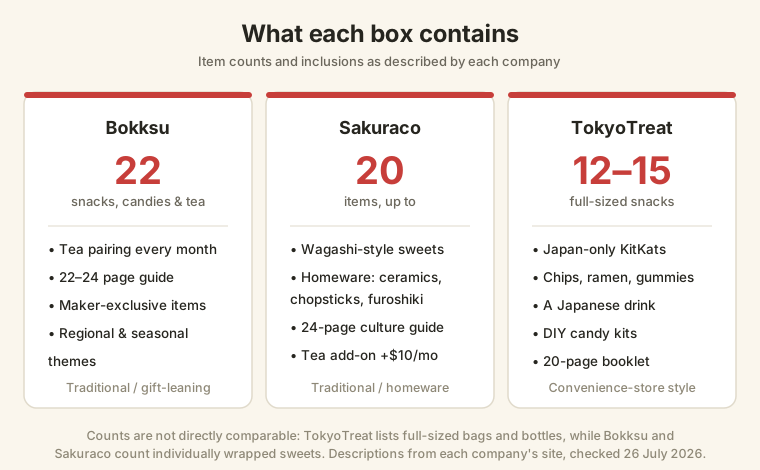
Each company states how much arrives, but the units are not equivalent. Bokksu describes 22 Japanese snacks, candies, and tea in a box. Sakuraco says up to 20 items. TokyoTreat’s help center puts its number at 12 to 15 — but specifies full-sized snacks, which in practice means a bag of chips, a package of ramen, or a bottled drink rather than an individually wrapped sweet.
Divide price by count and Bokksu looks cheapest per item and TokyoTreat most expensive. Weigh the box instead and the order likely reverses. The count is useful for knowing what to expect on the table, not for judging value.
Traditional or convenience store
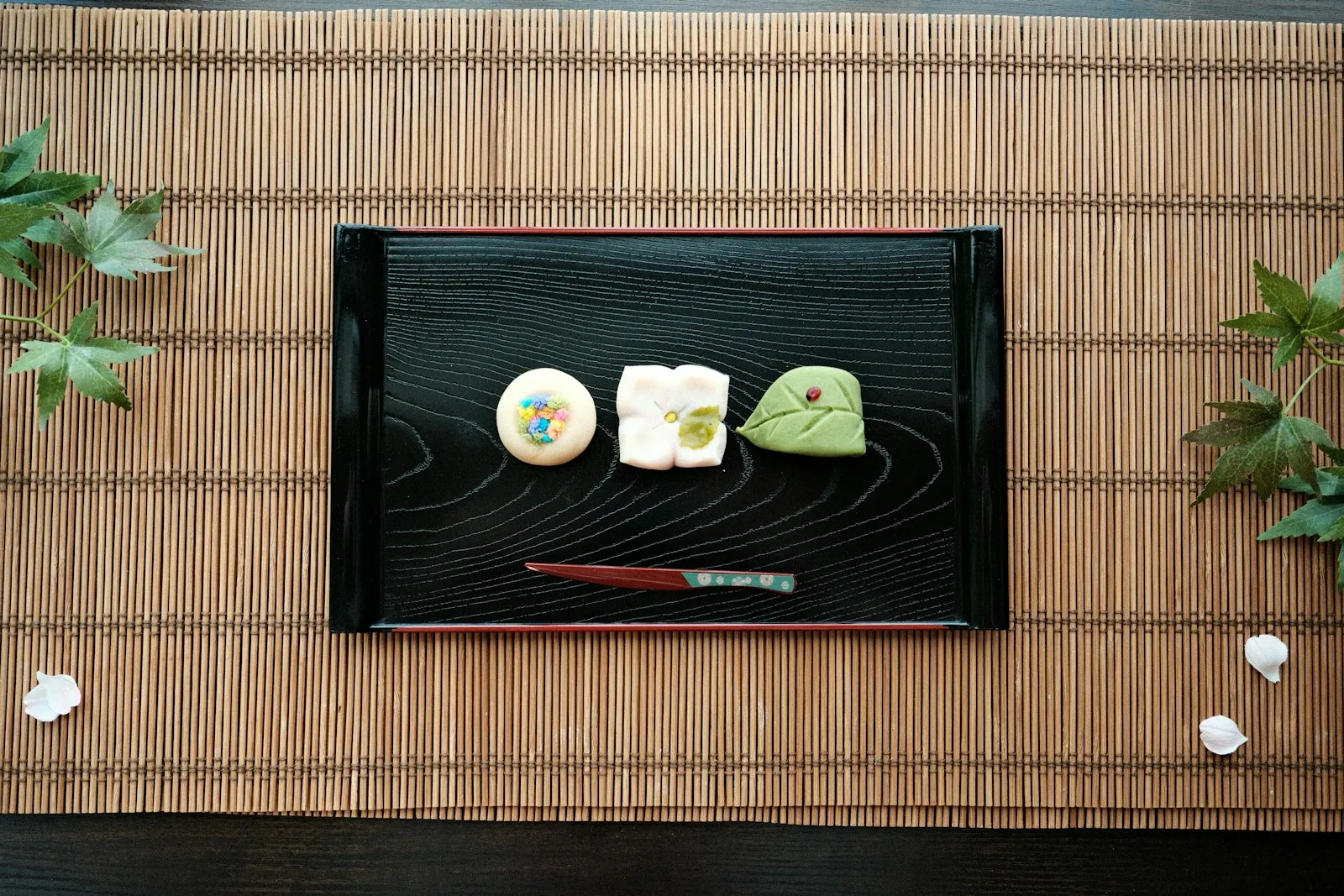
This is the fork that matters most, and it splits cleanly.
Bokksu and Sakuraco both curate toward traditional Japanese confectionery — wagashi, senbei, regional specialties from small family-run makers — and both include a printed guide explaining where each item comes from. Sakuraco goes further and puts homeware in the box: ceramics, chopsticks, or a furoshiki wrapping cloth sourced from Japanese makers. If the homeware is the part that appeals, the same maker-and-materials questions run through a Japanese chef knife’s steel and handle spec.
TokyoTreat curates the opposite way. Its published lineup is Japan-only KitKat flavors, chips, gummies, instant noodles, DIY candy kits, and a seasonal drink — the shelf of a Japanese convenience store, boxed. It is the only one of the three that includes a beverage as standard.
Two of these are the same company
Sakuraco and TokyoTreat are both ICHIGO brands. They share a help center, publish identical plan prices, and list identical shipping and duty figures. Choosing between them is a question of which snacks you want, not which company treats subscribers better — the terms are the same document.
What these snacks are in Japan
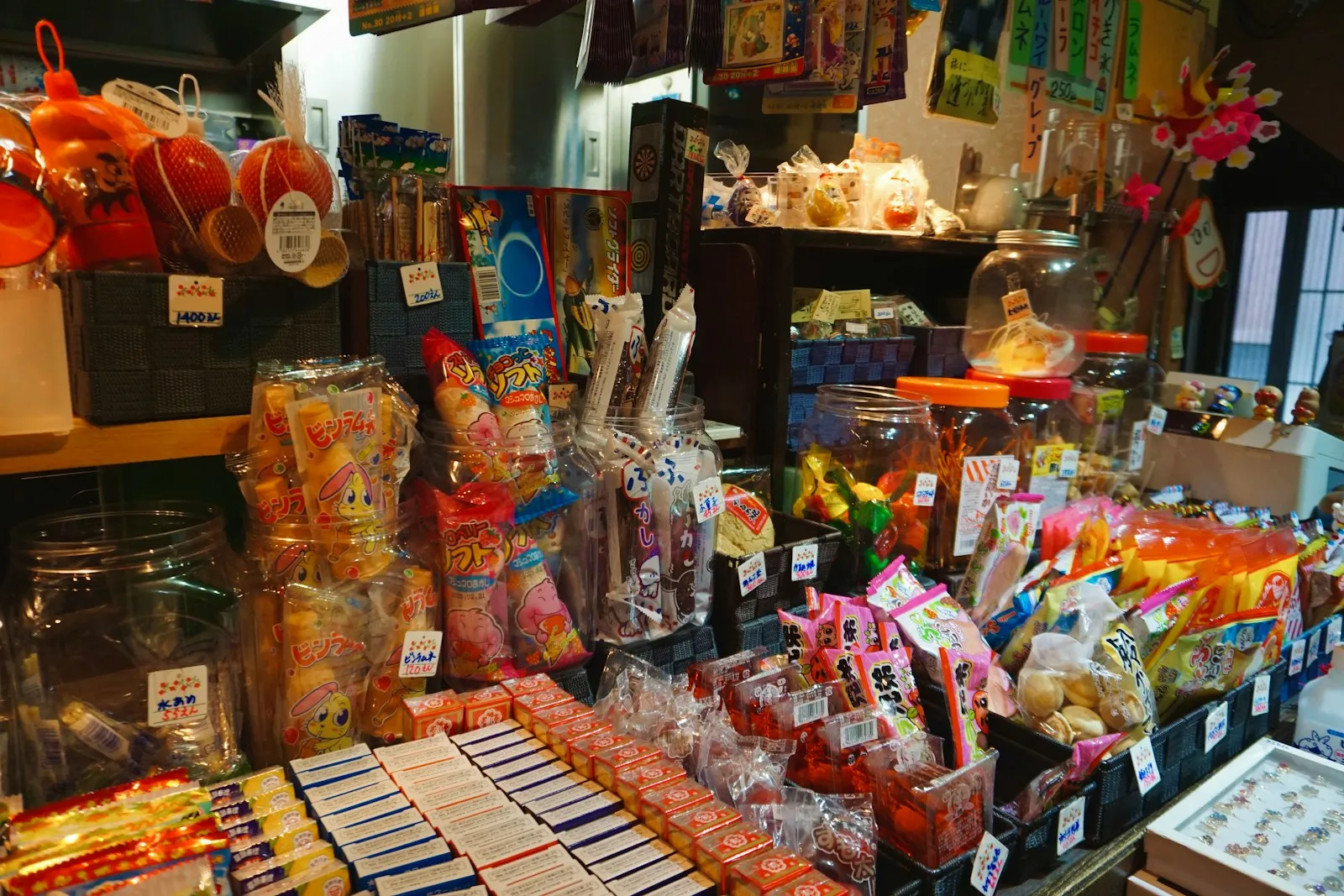
The category labels these companies use are real distinctions in Japan, not marketing invention, and knowing them makes the boxes easier to picture.
Wagashi are traditional confections — mochi, yokan, monaka, dorayaki — usually built on rice flour, sweet bean paste, and sugar rather than butter and chocolate. They are made to be eaten with green tea, which is why a box built around wagashi tends to include a tea pairing. Many are tied to a season or a specific prefecture, and quite a few are made by shops that have been running for generations. That is the pool Bokksu and Sakuraco draw from.
Dagashi sit at the other end: cheap, brightly packaged penny sweets sold to children, often for the equivalent of a few dozen yen each. They are nostalgic rather than refined, and TokyoTreat includes them deliberately.
The Japan-exclusive KitKat flavors that appear in nearly every one of these boxes are also a genuine phenomenon. Nestlé Japan has released hundreds of regional and seasonal varieties — matcha, sake, wasabi, Hokkaido melon — and many are sold as omiyage, the souvenir sweets Japanese travelers are expected to bring home for coworkers. Station and airport shops stock the version tied to that region, which is why a flavor found in Kyoto is genuinely hard to buy in Tokyo, let alone abroad. Chasing them in person means getting outside the obvious cities, which is where the Japanese carrier a travel eSIM runs on starts to matter.
Convenience store snacks rotate on a similar logic. Japanese konbini chains cycle limited-edition flavors constantly, often seasonal, and a given chip or gummy may be on shelves for only a couple of months. A box curated from that shelf will not repeat itself, but it also cannot promise any specific item in advance.
The comparison
| Bokksu | Sakuraco | TokyoTreat | |
|---|---|---|---|
| Monthly plan | $39.99/box | $37.50/box | $37.50/box |
| 3-month plan | $35.99/box | $35.50/box | $35.50/box |
| 6-month plan | $33.99/box | $33.50/box | $33.50/box |
| 12-month plan | $32.99/box | $32.50/box | $32.50/box |
| US shipping | At checkout, not published | $14.99/box | $14.99/box |
| US duties | Not published | $4.29/box | $4.29/box |
| Items per box | 22 snacks, candies & tea | Up to 20 | 12–15 full-sized |
| Printed guide | 22–24 pages | 24 pages | 20 pages |
| Tea included | Yes, monthly pairing | Add-on, +$10/mo | No |
| Non-food items | No | Ceramics, chopsticks, furoshiki | No |
| Style | Traditional, maker-focused | Traditional + homeware | Convenience store |
Prices above are the live rates each site displayed on 26 July 2026, read off the companies’ own pages and help centers rather than from boxes we opened — the spec-based approach behind every guide here. One caveat worth knowing: TokyoTreat’s own April 2026 pricing FAQ lists a different set of base rates — $39.99 monthly down to $29.99 on the 12-month plan — so the figures on the subscribe page appear to reflect a running promotion. Confirm the total at checkout before committing to a prepaid year.
Practical notes before subscribing
Delivery takes longer than domestic shipping. The US sits in the group these services label 7–28 days after shipping. That is the transit window, counted from the day the box leaves Japan, not from the day you order.
Prepaid plans are charged upfront. A 12-month plan is billed as a single payment, not month to month. At the Sakuraco and TokyoTreat rate that is $390 for the boxes plus roughly $230 in shipping and duties across the year. The discount for committing is modest and front-loaded: three months saves $2 per box against the monthly rate, six months saves $4, and twelve months saves $5. In cash terms that is $6, $24, and $60 respectively — real, but not the kind of gap that should override a preference for the snacks in the other box. Bokksu’s ladder is steeper at the top, $84 saved across a 12-month term, though its undisclosed shipping makes the annual total harder to pin down.
All three sell gift subscriptions. Each runs a separate gift flow alongside the standard plan, and Bokksu and Sakuraco both advertise corporate gifting as well. Gift terms are set out separately from the standard subscription terms, so check renewal behavior and shipping on the gift page itself rather than assuming it matches the regular plan.
Cancellation is possible, refunds are limited. All three describe auto-renewing subscriptions with the option to pause or cancel. Cancel before the renewal date rather than after; once a prepaid term is charged, you are generally holding a year of boxes.
Allergen information is included but the boxes are not customizable. Each service publishes allergen details in its guide or online listing, and each states plainly that it does not offer allergy-specific, vegan-only, or halal-only boxes. If someone in the household has a serious allergy, the guide tells you what to avoid; it does not remove it from the box.
Prices have moved recently. All three changed pricing during 2026, and the shipping and duty structure changed twice after the US customs rules shifted in late 2025. Any comparison, including this one, has a short shelf life — treat the checkout screen as the authority. If a figure here has drifted from what the site now shows, our contact page takes corrections.
FAQ
Which Japanese snack box is the best value? On published per-box pricing, the three are within $1.50 of each other on comparable plans, so value comes down to shipping and contents. Sakuraco and TokyoTreat cost a known $51.78 per box on the 12-month plan once shipping and duties are added, while Bokksu’s total depends on a shipping rate it discloses only at checkout. Between the two with transparent pricing, Sakuraco delivers more items plus a homeware piece, and TokyoTreat delivers fewer but larger items.
Are Sakuraco and TokyoTreat the same box? No, but they are the same company. Both are ICHIGO brands with matching prices and shipping terms. Sakuraco is the traditional-confectionery box with homeware; TokyoTreat is the modern, convenience-store-style box with a drink. Some subscribers describe them as the grandmother’s tea table and the after-school snack aisle.
Do I have to pay customs fees when the box arrives? Sakuraco and TokyoTreat collect approximately $4.29 per box upfront specifically so US customs charges are settled in advance, and they state they keep none of it. Bokksu does not publish an equivalent prepaid duty line, so US buyers should check the checkout total. Customs enforcement is ultimately decided by US Customs and Border Protection, and none of these companies can guarantee an outcome at the border.
Summary
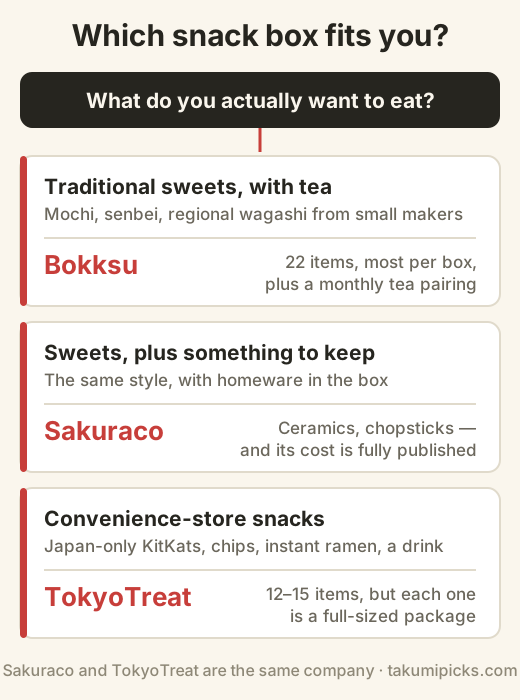
The decision is simpler than the marketing suggests. If you want traditional Japanese confectionery with the most items per box and a monthly tea pairing, Bokksu fits — accepting that you will not know your shipping cost until checkout. If you want that same traditional style plus a piece of Japanese homeware each month, and you want the full landed cost visible before you commit, Sakuraco is the transparent option. If what you actually picture is Japan-exclusive KitKats, instant ramen, and a bottle of melon soda, TokyoTreat is the only one of the three curating that way, and the item count being lower is a consequence of the items being bigger.
Whichever you pick, run the arithmetic on the landed cost rather than the headline. A $32.50 box that arrives at $51.78 is still reasonable for a monthly parcel from Japan, but it is a different decision from a $32.50 one — and it is the number that decides whether a 12-month prepay makes sense.
Shopping for Japanese kitchen equipment rather than snacks? Our Japanese chef knife buyer’s guide covers steel, handles, and what changes at each price tier — and the same duty rules that push these boxes above their sticker price apply to a knife shipped from Japan.
Going to Japan yourself instead? You will want a data plan before you land, and the fine print differs more than the pricing does. Our comparison of Japan eSIM plans covers what each provider actually means by “unlimited” and which carrier’s network you end up on. It is filed under Japan travel, where the trip-planning comparisons collect.