Santoku vs. Gyuto vs. Nakiri: Which Shape to Buy First

This article contains affiliate links. If you buy through them, we may earn a commission at no extra cost to you. Ad revenue can influence which products we cover, but the comparison criteria and verdicts are decided independently from official specs and published sources. Read our full disclosure.
A santoku, gyuto, and nakiri can all look like reasonable first Japanese knives. The useful question is not which shape is “best,” but which one matches the food and cutting motions that show up in your kitchen.
Even Japanese makers do not describe these categories in exactly the same way. Those disagreements are useful, because they show why the silhouette and your cutting habits matter more than a tidy origin story.
If steel, handle style, and budget are still open questions, start with our Japanese chef knife buyer’s guide. This comparison stays focused on shape.
Verdict
None of these three shapes is universally better, so buy for the food that fills your board.
- Santoku for mixed vegetables and boneless proteins on a modest board, mostly push cuts and straight chopping. You give up reach and tip.
- Gyuto for a longer edge, more curve for rocking, and a point for trimming and detail work. You give up compactness in a small kitchen.
- Nakiri for vegetable-heavy prep on a wide, level edge. You give up the point, so tip-led jobs need a second knife.
Beware the names: KAI, Kiya, Tojiro and Shun do not classify these categories the same way, and none of the four publishes bunka as an official shape. Compare edge curve, tip, height, bevel and measurements rather than the heading on a product page.
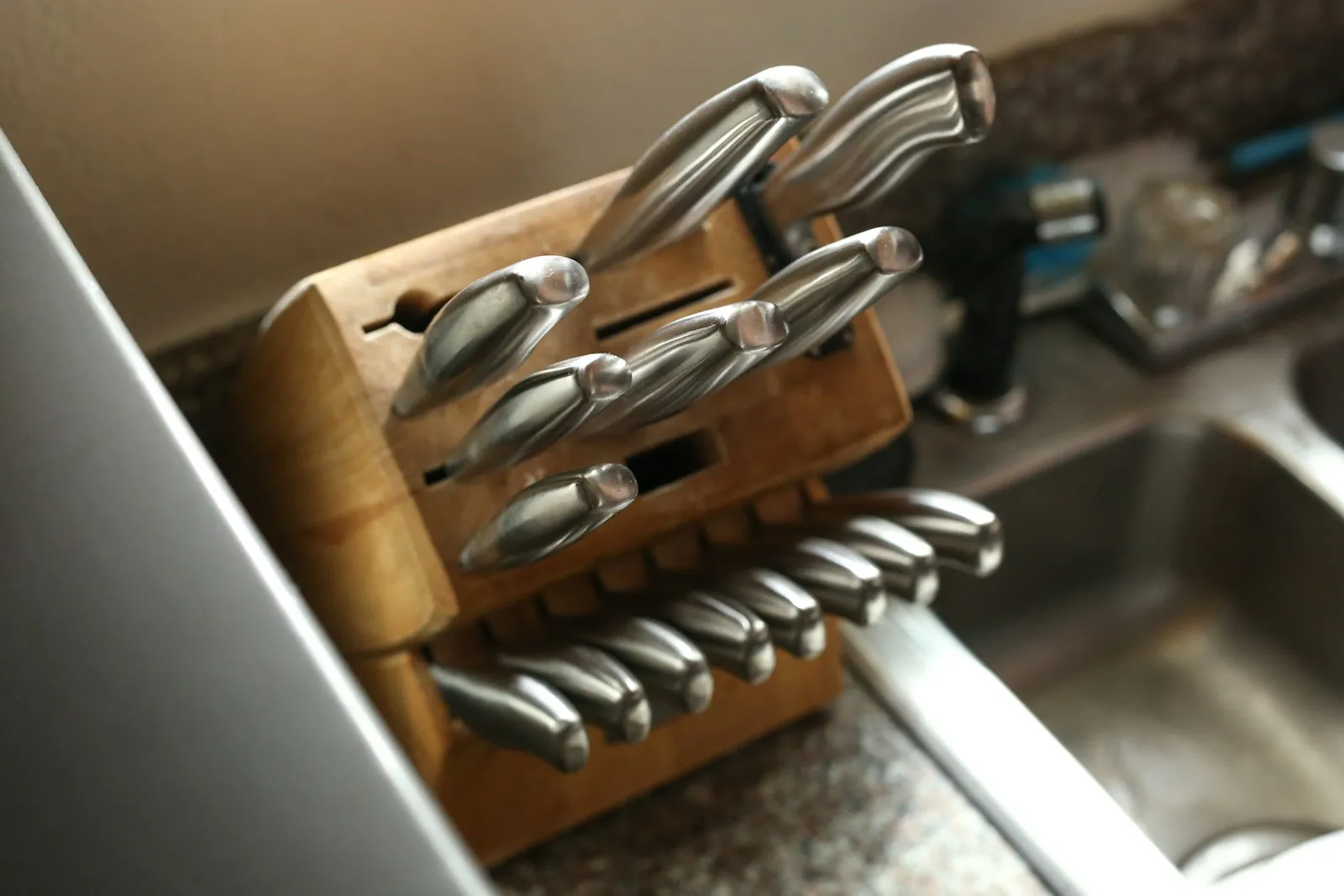
The three-way decision at a glance
| Your usual prep | Likely fit | What the shape gives you | Tradeoff to accept |
|---|---|---|---|
| Mixed vegetables and boneless proteins on a modest board | Santoku | Compact general-purpose blade with a relatively flat cutting profile | Less tip reach and less curve for extended rocking cuts |
| Large produce, meat portions, herbs, and detail work with the tip | Gyuto | Longer slicing reach, pointed tip, and a more curved profile | Needs more board space and can feel long in a small kitchen |
| High-volume vegetable slicing, dicing, and straight chopping | Nakiri | Wide blade and level edge designed around vegetable work | No pointed tip and less flexibility for general-purpose detail work |
This matrix assumes normal home-kitchen tasks. None of the three is intended for bones, frozen food, or twisting through hard ingredients. Shape changes how a knife moves; it does not remove the limits of a thin kitchen edge.
Why the labels are less standardized than they look
“Santoku” is often presented in English-language shopping guides as a traditional Japanese counterpart to a Western chef knife. Manufacturer material tells a more complicated story.
KAI classifies santoku as a Western-style knife and describes it as a Japanese Western-style design combining features of Japanese and Western knives. Kiya uses the name “Kamagata-Japan style” for its comparable household shape and says it changed over time from the gyuto, becoming common in Japanese homes after World War II. Shun’s US knife guide, meanwhile, gives santoku its own consumer-facing category and calls it a versatile choice for daily preparation.
That makes “traditional versus Western” a poor buying test. A more useful test is whether the actual blade is compact or long, flat or curved, and whether the tip supports the work you do.
Names also shift by market. The same Shun knife guide uses “Chef’s Knives” rather than “Gyuto,” while Japanese makers use gyuto as a standard category. A US listing and a Japanese listing may therefore describe similar roles with different labels. Compare the profile and specifications, not just the heading on the product page.
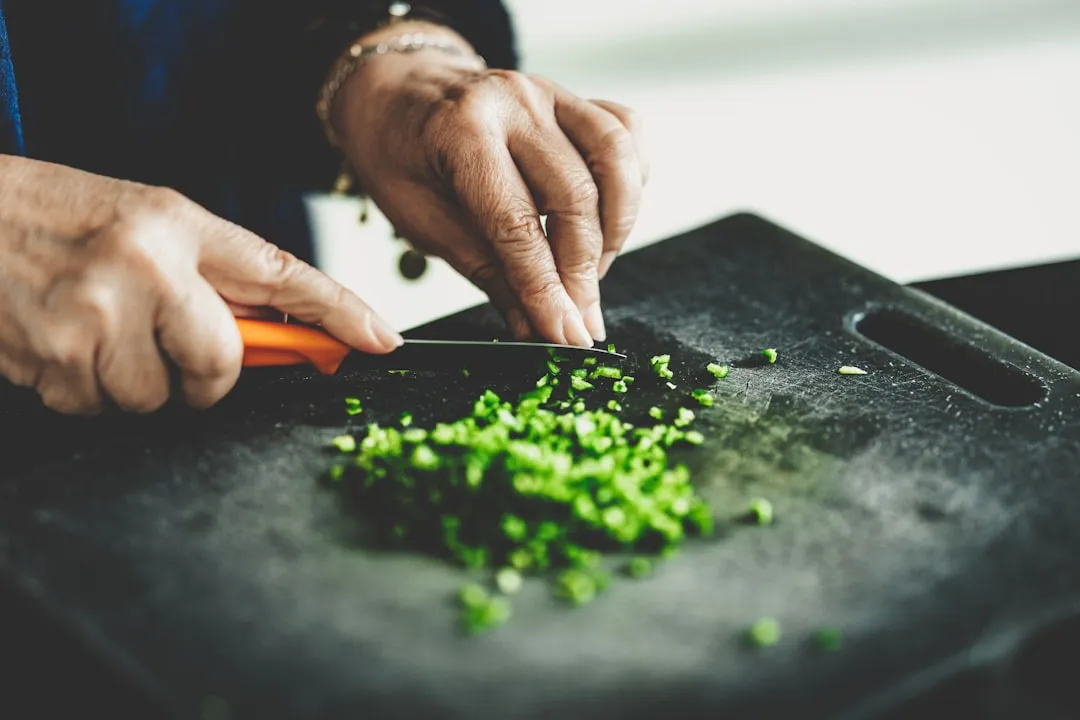
Santoku: the compact mixed-prep shape
A santoku suits kitchens where dinner prep moves repeatedly between onions, carrots, herbs, chicken breast, and other boneless ingredients. Its profile is generally shorter and flatter than a gyuto, with a tip that drops toward the edge rather than projecting far forward.
That geometry favors controlled push cuts and straight up-and-down chopping. It can still slice and perform some rocking cuts, but the flatter edge gives you less continuous curve to roll across the board. The less prominent tip also makes it less natural for jobs that depend on a long, narrow point, such as tracing around joints, making long draw cuts, or reaching into tight spaces between florets.
KAI describes santoku as broadly useful for meat, seafood, and vegetables. Tojiro similarly presents santoku as a general-purpose household knife and specifically recommends the category to people buying their first knife or trying to keep the number of knives in the kitchen low. That is Tojiro’s recommendation, not a universal industry rule, but it reflects the shape’s intended role: mixed everyday prep without requiring a long blade.
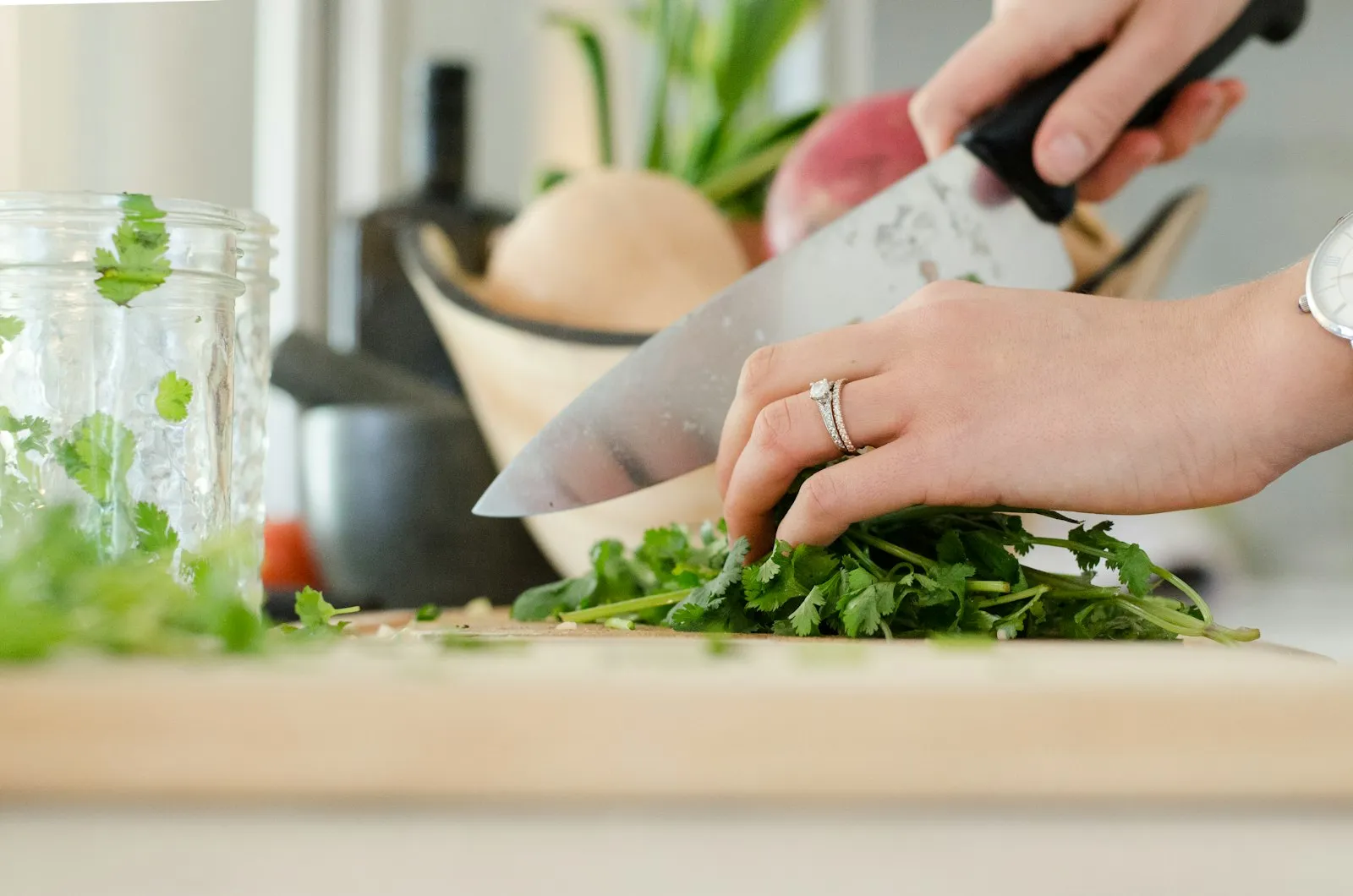
A santoku is the clearer fit when:
- your cutting board and counter space are limited;
- you mostly chop or push-cut rather than rock for long stretches;
- you prepare a mix of vegetables and boneless proteins;
- a long point feels unnecessary or awkward; and
- you want one general-purpose knife but do not regularly cut very large produce or long meat portions.
The main compromise is reach. A compact blade needs more strokes across a large cabbage, melon, roast, or long cut of meat. It also gives you less tip to work with. If those tasks are frequent rather than occasional, a gyuto’s extra length and point may fit better.
Gyuto: more reach, curve, and tip control
A gyuto is the shape to examine when “one knife” needs to cover both broad slicing and detailed tip work. Its narrower, pointed profile extends farther forward than a santoku, while its edge usually carries more curve. That combination supports push cuts, draw cuts, and rocking motions without making the knife a specialist in only one of them.
Kiya describes gyuto as a double-ground knife used for meat, vegetables, small fish, and even sashimi-style slicing. Tojiro’s gyuto guide adds more task-level detail: it points to the sharp tip for separating broccoli florets, the relatively narrow blade for thin meat slices, and the longer edge for large ingredients that are harder to cut in one pass with a santoku.
That does not make gyuto inherently more versatile for every cook. Length only helps when the board, hand position, and ingredients can use it. In a small apartment kitchen, extra blade can spend more time bumping into the board’s edge or surrounding objects than completing long slices.
A gyuto is the clearer fit when:
- you regularly cut large produce or portion larger pieces of meat;
- you use the tip for trimming, scoring, or working around small features;
- you alternate among rocking, push-cutting, and long slicing strokes;
- your board has enough depth and width for a longer blade; and
- you are comfortable guiding a more pointed tip around the board.
The compromise is compactness. A gyuto can do small jobs, but the knife may feel unnecessarily long when most of your prep is a single onion, a few mushrooms, and one chicken breast. If that describes a normal weeknight, a santoku can provide the general-purpose role with less blade to manage.
Nakiri: the vegetable specialist
Nakiri changes the decision because it is not simply a santoku with a square nose. KAI and Kiya both describe nakiri as a double-bevel vegetable knife. Kiya emphasizes its level edge and wide blade, while KAI lists tasks such as chopping, peeling, trimming, and working with vegetables.
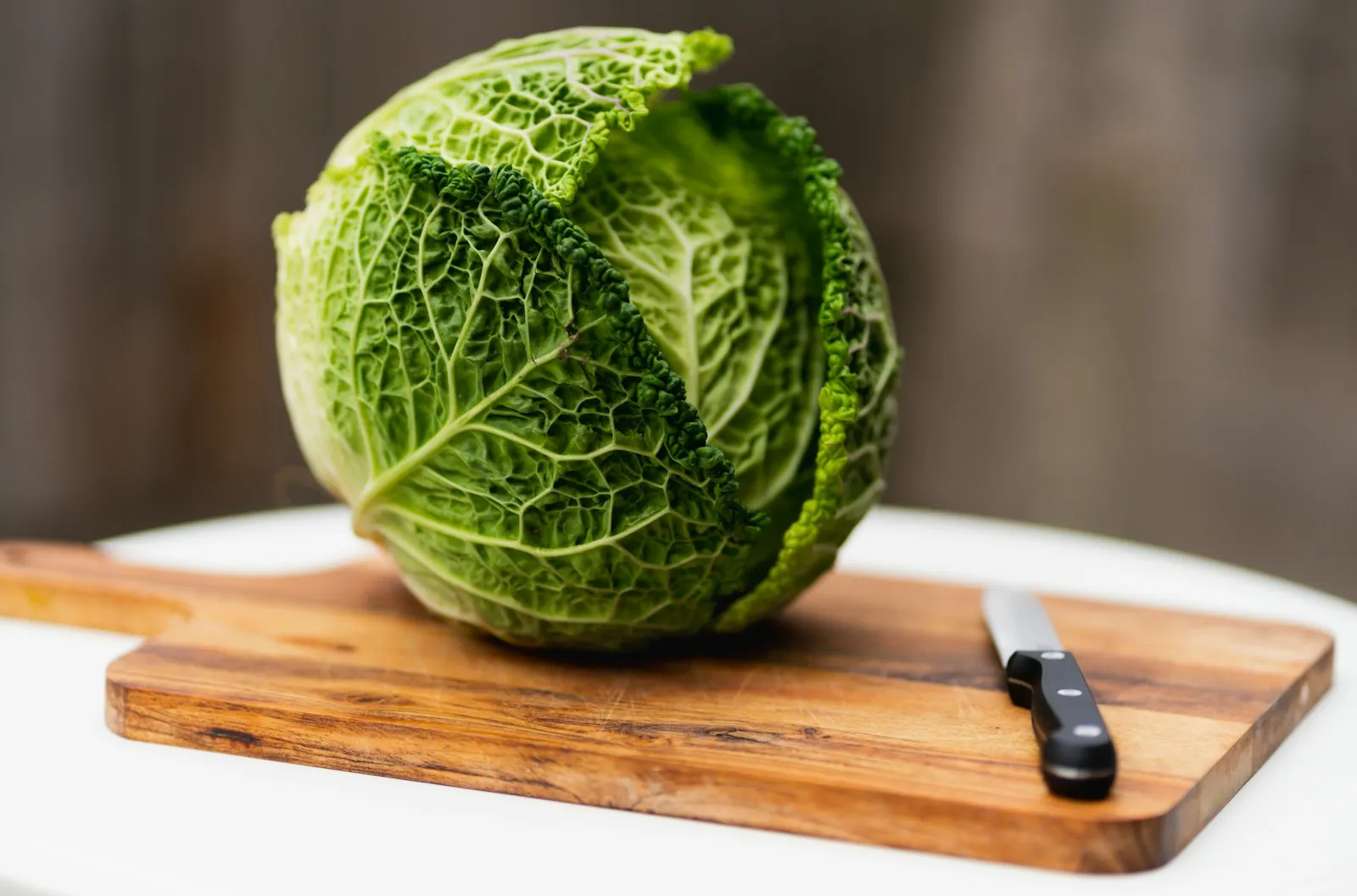
The nearly level edge is useful when you want consistent contact with the cutting board. It suits repetitive straight cuts through scallions, leafy greens, cabbage, and vegetables prepared for dice or julienne. The wide blade also gives the hand more clearance above the board than many narrow utility shapes.
The missing pointed tip is part of the design, not a defect. It is also the reason nakiri is less natural for puncturing, tracing, or detail work that starts with the point. A nakiri can cut many boneless foods, but its defining advantages show up most clearly in vegetable prep. If meat, fish, and tip work make up a large share of your cooking, choosing it as the only knife means accepting that specialization.
A nakiri is the clearer fit when:
- vegetables account for most of your cutting time;
- you favor straight chopping and push cuts over rocking;
- you want a wide blade with a flat section that reaches the board cleanly;
- fine vegetable slicing and repetitive cuts matter more than a pointed tip; and
- you already have another knife for trimming, portioning, or detail work — or you rarely need those tasks.
It can still be a first purchase for a vegetable-heavy kitchen. “Specialist” does not mean “second knife only.” It means the purchase makes sense because of what you cut, not because the rectangular silhouette is fashionable.
Kanto and Kansai profiles
KAI and Kiya agree on a regional variation in Japanese vegetable-knife profiles: the Kanto, or eastern, pattern has a more rounded heel area, while the Kansai, or western, pattern is more angular. This difference is visible at the back of the blade, not just at the front.
Treat that as a profile detail rather than a quality grade. The practical question is whether the heel shape and usable flat section feel natural for your chopping motion.
Nakiri is not automatically the same thing as usuba
The similar rectangular outline can make nakiri and usuba look interchangeable in a product grid. The bevel information is more important than the outline. For nakiri, KAI and Kiya agree on a double-bevel edge. Usuba descriptions are not nearly as consistent in the source material.
Kiya describes usuba as single-ground. KAI’s own material is internally inconsistent: its general explanation says Japanese knives are basically single-bevel, while its usuba entry describes that knife as double-beveled. There is not enough agreement here to declare one universal usuba bevel from these pages.
For a buyer, the safe conclusion is simple: do not infer the bevel from the rectangular silhouette or the Japanese name. Check the individual knife’s specification. A double-bevel nakiri is the category on which the two makers clearly agree.
What about bunka?
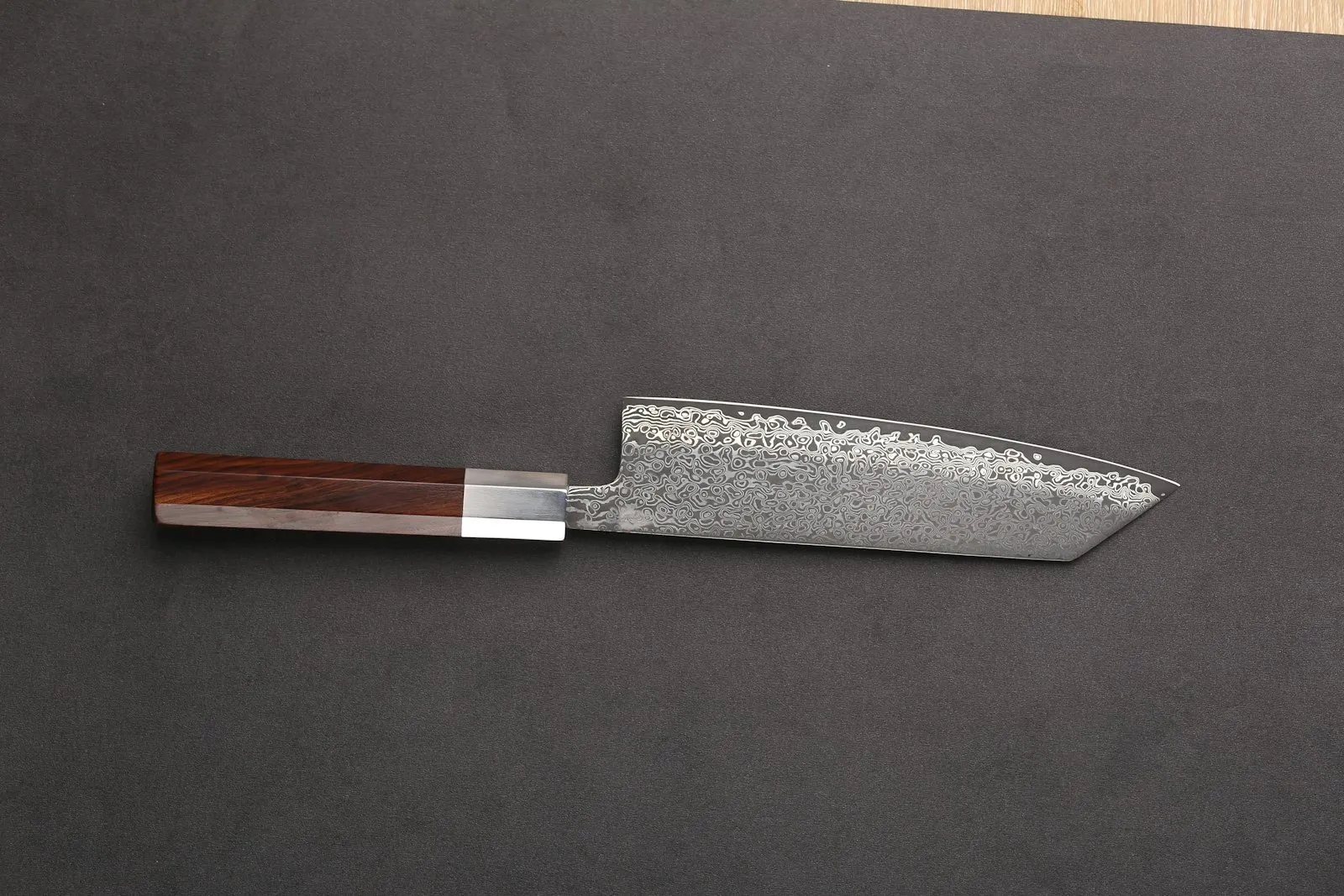
Bunka appears frequently in retailer listings and enthusiast discussions, but it should not be inserted into this comparison as a fourth standardized shape. As of the source review for this article, the category pages checked from KAI, Kiya, Tojiro, and Shun do not publish bunka as an official shape category. None of the four provides an official definition that can be used as a shared standard.
That does not mean a knife sold as bunka is mislabeled. It means the name alone does not support a universal claim about blade length, tip geometry, or intended use. If a bunka catches your attention, compare its actual edge curve, tip, height, bevel, and dimensions with the santoku, gyuto, and nakiri profiles you are considering. Do not assume “bunka” guarantees a fixed combination of their features.
Five questions that settle the choice
1. What fills most of your cutting board?
If the answer is mixed vegetables and modest portions of boneless protein, santoku is the most direct shape to compare. If large produce, long meat cuts, and varied slicing tasks are routine, look closely at gyuto. If the board is mostly covered with vegetables waiting to be chopped, nakiri’s flat, wide profile is the relevant one.
2. How often do you use the tip?
Choose based on actual tasks, not the visual appeal of a dramatic point. Scoring, trimming, separating florets, and working around small features all benefit from a gyuto’s pointed tip. Santoku provides a less prominent point for occasional detail work. Nakiri largely removes the tip from the workflow.
3. Do you rock, push, or chop?
A more curved gyuto supports a longer rocking motion. A flatter santoku suits shorter push cuts and chopping while retaining some general-purpose curve. Nakiri puts the strongest emphasis on straight vegetable cuts and board contact. Most cooks mix motions, so identify the one used most often rather than trying to fit every technique equally.
4. How much board space do you have?
Knife length is useful only when the board can support it. A compact santoku can feel more controlled on a smaller board. A gyuto benefits from room for the edge and tip to travel. A nakiri is not especially long, but its blade height still needs comfortable knuckle clearance and an uncluttered path.
5. Is this the only knife or the start of a set?
For a one-knife kitchen, choose the general-purpose profile that covers the largest share of your real prep: santoku for compact mixed work or gyuto for more reach and tip use. Nakiri becomes especially easy to justify when a paring, utility, santoku, or chef knife already handles the jobs that require a point. It can still be the first knife when vegetable prep is genuinely the center of the kitchen.
If you can handle the knives in person
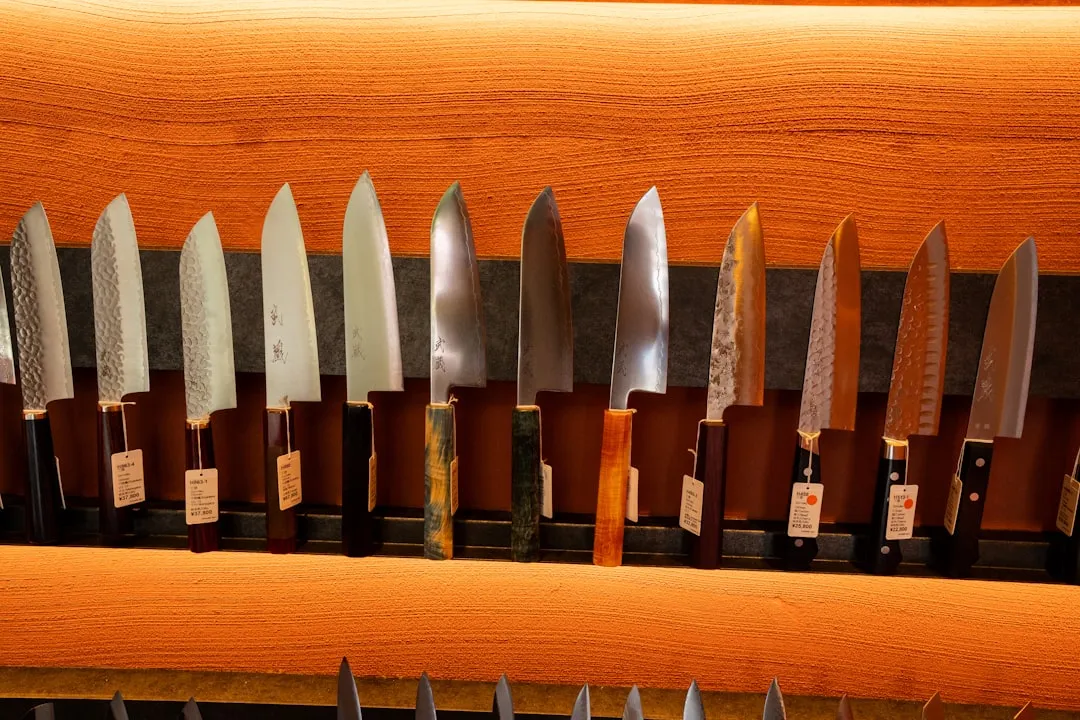
Product photos flatten important differences in balance, board clearance, and perceived length. If you are shopping in Japan, compare the shapes with the same pinch grip you use at home and ask whether the store can explain the bevel and intended cutting motion. Keep the maker pages available rather than relying only on translated shelf cards; our Japan eSIM comparison covers practical connectivity options for a trip.
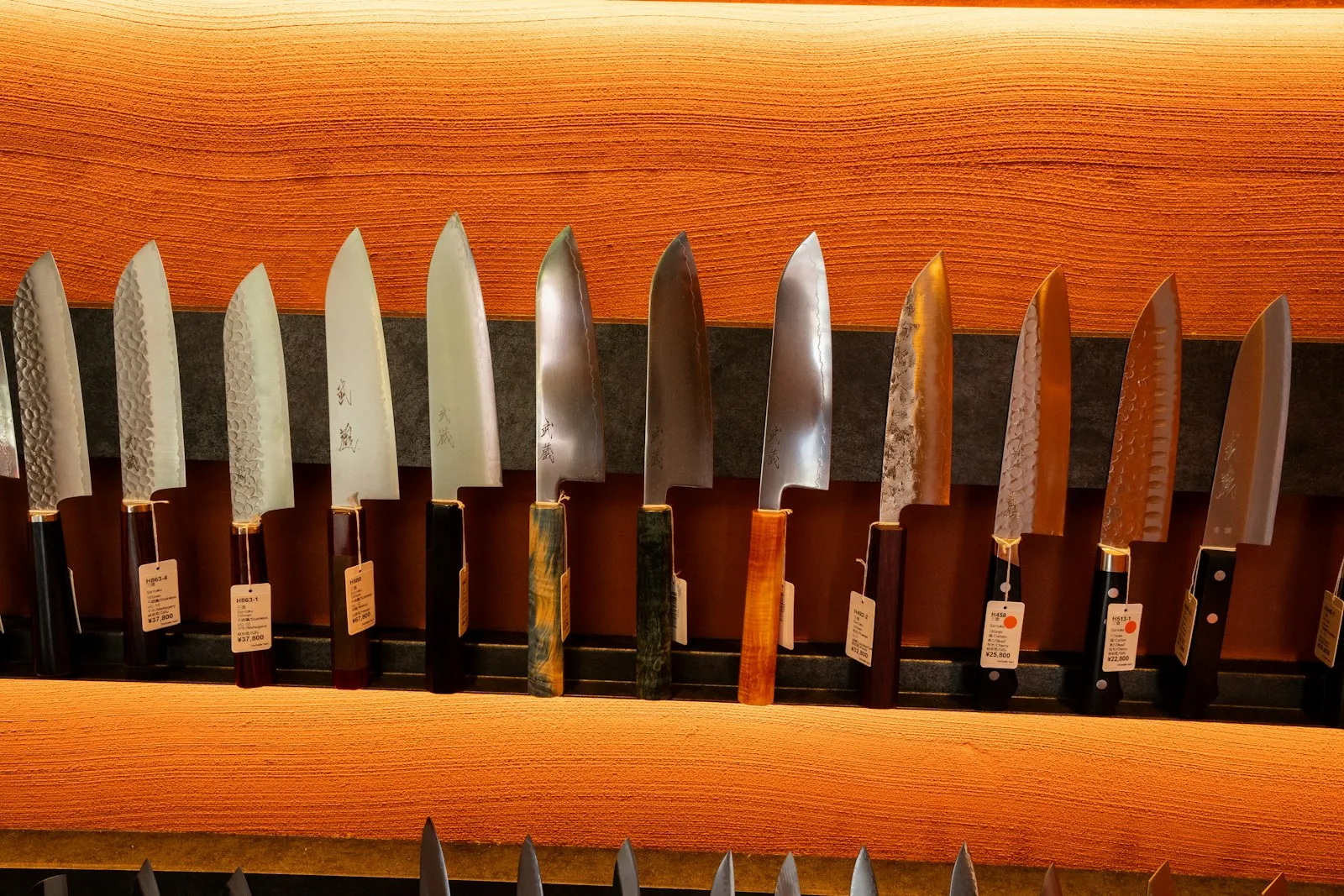
Do not test an edge by touching or running a finger along it. Ask the staff how they prefer customers to handle display knives, and compare comfort, clearance, and control rather than trying to judge sharpness in the store.
FAQ
Is a santoku easier for a beginner than a gyuto?
Not automatically. A santoku can feel easier on a small board because it is more compact and has a less projecting tip. A gyuto may feel more natural to someone already comfortable with a Western chef knife or someone who uses a rocking motion. The better starting shape is the one that matches the cook’s board, grip, and most common cuts.
Can a nakiri be my only kitchen knife?
Yes, if vegetable prep dominates and another small knife is available for jobs that need a point. As a sole knife, a nakiri asks you to accept weaker performance in trimming, puncturing, and other tip-led tasks. It is a focused choice rather than a lesser one.
Is bunka a standard alternative to santoku, gyuto, and nakiri?
The four manufacturers checked for this article do not publish a shared official bunka category or definition. Retailers may use the term, but buyers should compare the individual knife’s tip, curve, height, bevel, and measurements instead of assuming the name describes one standardized shape.
Bottom line
Buy for the food on your board. Santoku fits compact, mixed daily prep; gyuto fits cooks who use more reach, curve, and tip control; nakiri fits vegetable-heavy cutting built around a flat edge. None is universally better, and the manufacturer descriptions do not support treating the categories as a simple ladder from beginner to advanced.
The most reliable choice comes from three observations: what you cut most, how your hand moves through it, and how much board space the knife can use. Once those are clear, the silhouette becomes a practical decision rather than a debate about which Japanese shape is supposed to come first.
If you would rather order online than handle the knives in a shop, Okami Blades sells Japanese kitchen knives in the santoku, gyuto, and nakiri shapes discussed here and, as of September 2026, gives readers arriving through that link 10% off an order. It is an affiliate link: we earn a commission on purchases at no extra cost to you, and the shape comparison above was written from the makers’ pages, not from their catalog.
Sources: KAI — Western-style knife types, KAI — Japanese knife types, Kiya — Type of kitchen knives, Tojiro — Gyuto, Tojiro — Santoku, Tojiro — Vegetable knives, Shun — Knife Types (all accessed 10 August 2026).