Can You Use a Japanese 100V Rice Cooker in the US?

The conservative answer is no: do not plug a Japan-market 100V rice cooker directly into a US outlet, and do not assume that adding a transformer makes the setup approved or safe. Japan-market models are designed around 100V. US household appliances are commonly designed and tested around 120V, and the difference is not something a plug-shape adapter can correct.
The manufacturers’ published guidance is also restrictive. Panasonic discourages overseas use of its domestic rice cookers and says that even with a transformer, the microcomputer may malfunction or fail. Tiger’s rice-cooker manual says its 100V model cannot be used in countries with different voltage or frequency requirements. A Zojirushi shared appliance caution carries the same 100V-only warning, although the source we could verify was not rice-cooker-specific.
If the goal is dependable daily use in the United States, the practical route is to buy a model whose rating label and official manual specify 120V/60Hz for the US market, with support and warranty terms that apply in the United States.
Verdict
Do not plug a Japan-market 100V rice cooker into a US outlet, and do not treat a step-down transformer as an approved fix. A plug adapter changes the shape of the connection, not the voltage, and the US design and test context for household cooking products is 120V/60Hz — 20% above the 100V these appliances are rated for.
The makers say so themselves. Panasonic says overseas use of its domestic rice cookers is not recommended, that even with a transformer the microcomputer may malfunction or the unit may fail, and that such use falls outside the warranty. Tiger’s JBH-G manual states the product uses only 100V and cannot be used in countries with different voltage or power frequency requirements, or receive after-sales service abroad.
Transformers are not the loophole: Nissyo and Yazawa, both Japanese transformer makers, list rice cookers among the products that cannot use an electronic transformer. Panasonic’s tourist models are not it either — every voltage listing on the official tourist page checked was 220V. For US use, buy a cooker whose rating label and official manual specify 120V/60Hz for the US market.
The short decision guide
| Situation | What the published guidance supports | Main reason |
|---|---|---|
| Plug a Japanese 100V cooker directly into a US outlet | Do not do this | The appliance is outside its stated voltage; maker manuals warn of fire, failure, or electric-shock risks from incorrect voltage |
| Add a simple plug adapter | Not a voltage solution | An adapter changes the plug shape, not 120V to 100V |
| Buy an electronic transformer | Do not assume compatibility | Two transformer makers explicitly place rice cookers among products that cannot use electronic transformers |
| Import a Panasonic tourist model for US use | The models verified were not suitable | Every listed model we checked was 220V, with no 110V or 120V version shown |
| Buy a US-market model labeled 120V/60Hz | The clearest option | The appliance is designed for the local supply and can have US-market support terms |
Sources: Panasonic rice-cooker FAQ (Japanese only), Tiger JBH-G rice-cooker manual, Nissyo transformer guide (Japanese only), Yazawa transformer guide (Japanese only), Panasonic tourist rice cookers (Japanese only) (all accessed 10 August 2026).
Why 100V versus 120V matters
Japan’s Electricity Business Act Enforcement Regulations, Article 38, identifies 100V as a standard supply voltage. The same provision describes the maintained value for that service as 101V plus or minus 6V, or 95V to 107V.
For the United States, the federal rule we verified is an appliance test procedure rather than a universal promise about the exact voltage at every wall outlet. In 10 CFR Part 430, Subpart B, Appendix I, the US Department of Energy specifies a 120V/60Hz electrical supply when testing certain cooking products. That is enough to show the design context: a Japanese domestic appliance marked 100V is not being used on the voltage it was built for when connected to a typical US 120V circuit.
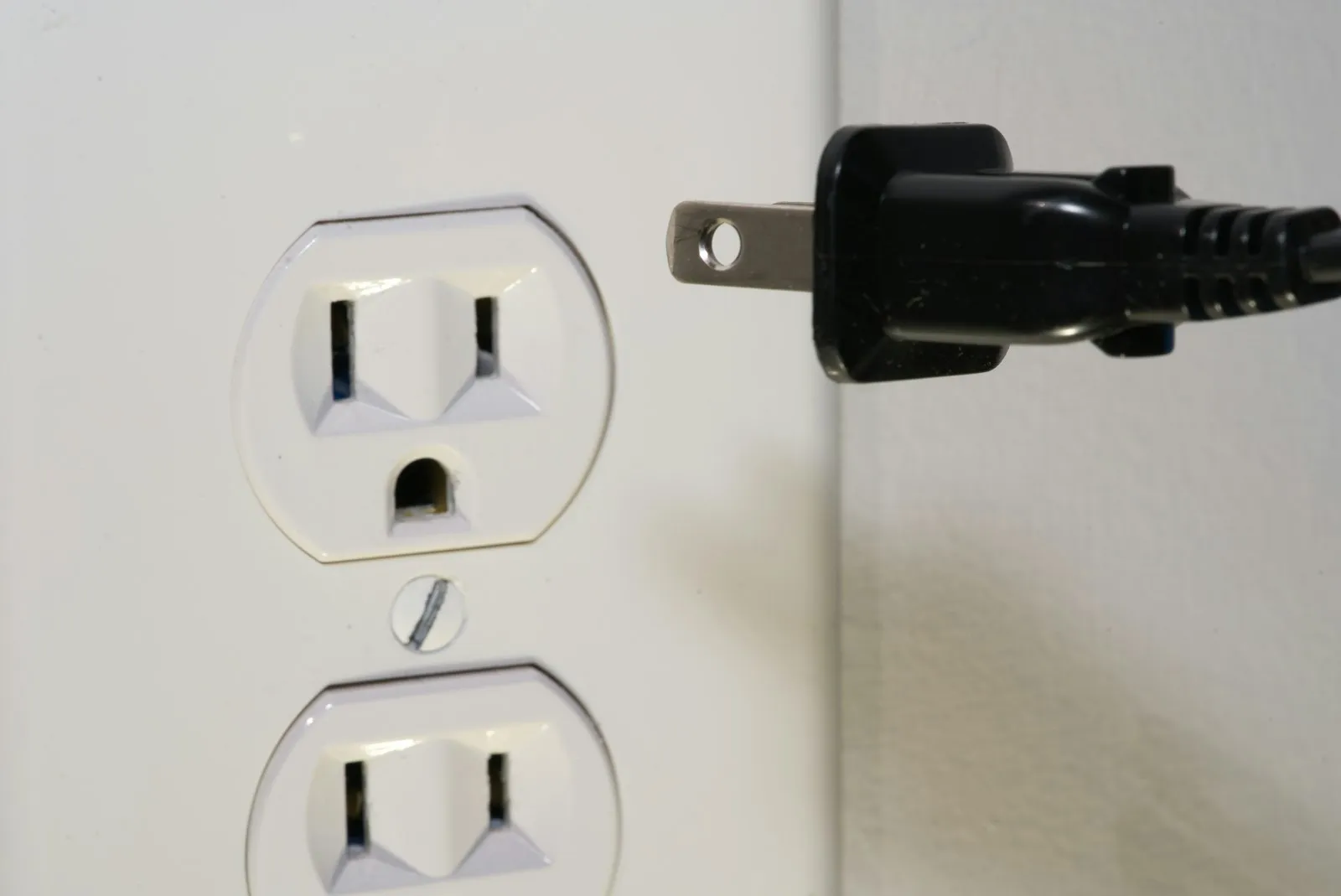
A useful way to see the difference is that 120V is 20% higher than 100V. That calculation alone does not predict exactly how a particular rice cooker will fail, and this guide does not infer an internal failure mechanism. The relevant point is simpler: 120V is outside the appliance’s 100V rating, and the manufacturers tell owners not to use these domestic models under different voltage conditions.
Frequency is usually not the central mismatch for the examples reviewed here. Tiger’s JBH-G specifications state 100V, 50–60Hz, while the US Department of Energy test condition is 60Hz. The voltage remains the unresolved difference.
Sources: Japan Electricity Business Act Enforcement Regulations, Article 38 (Japanese only), 10 CFR Part 430, Subpart B, Appendix I, Tiger JBH-G rice-cooker manual (all accessed 10 August 2026).
What the rice-cooker manufacturers say
The safest interpretation comes from the appliance makers’ own instructions rather than from retailer listings or informal reports.
Panasonic: a transformer does not remove the warning
Panasonic’s official Japanese FAQ says its domestically sold rice cookers are designed for domestic use and that overseas use is not recommended. More importantly, it states that even when a transformer is used, the microcomputer may malfunction or the unit may fail. It also says that using a domestic model overseas places it outside the warranty.
That makes Panasonic’s position unusually clear. A transformer may change the voltage reaching the appliance, but Panasonic still does not present that arrangement as an approved route for its Japan-market rice cookers.
Sources: Panasonic rice-cooker FAQ (Japanese only) (accessed 10 August 2026).
Tiger: Japan-only 100V and no overseas service
Tiger provides an official English warning in the JBH-G rice-cooker manual:
“This product uses only 100 V (volts), which is specifically designed for use in Japan. It cannot be used in other countries with different voltage, power frequency requirements, or receive after-sales service abroad.”
The same manual lists use on anything other than AC 100V among prohibited uses associated with fire or equipment failure. It also calls for a dedicated outlet rated at 15A or more rather than a multi-outlet connection. Those instructions describe a product intended for a specific domestic electrical environment, not a portable appliance meant to follow the user between countries.
The manual’s specifications list 635W for the 1.0-liter type and 895W for the 1.8-liter type. These are substantial cooking loads, which is another reason not to treat the cooker like a low-power phone charger that only needs a plug adapter.
Sources: Tiger JBH-G rice-cooker manual (accessed 10 August 2026).
Zojirushi: the verified warning is broader than rice cookers
Zojirushi publishes the following English caution in an official appliance manual:
“This appliance was designed for use in Japan only where the local voltage supply is AC100V and should not be used in other countries where the voltage and frequency vary. After-sales service for this appliance is not available outside of Japan.”
There is an important limitation to this source: the text we could verify came from a Zojirushi humidifier manual, not a rice-cooker-specific page. Zojirushi’s rice-cooker FAQ could not be retrieved in a form that allowed the wording to be checked, so this article does not present the quotation as a rice-cooker-specific Zojirushi statement. It is evidence of Zojirushi’s shared 100V-only caution for Japan-market appliances, including the lack of overseas after-sales service in that notice.
Sources: Zojirushi EE-FA appliance manual (accessed 10 August 2026).
Why “just use a transformer” is not a safe general answer
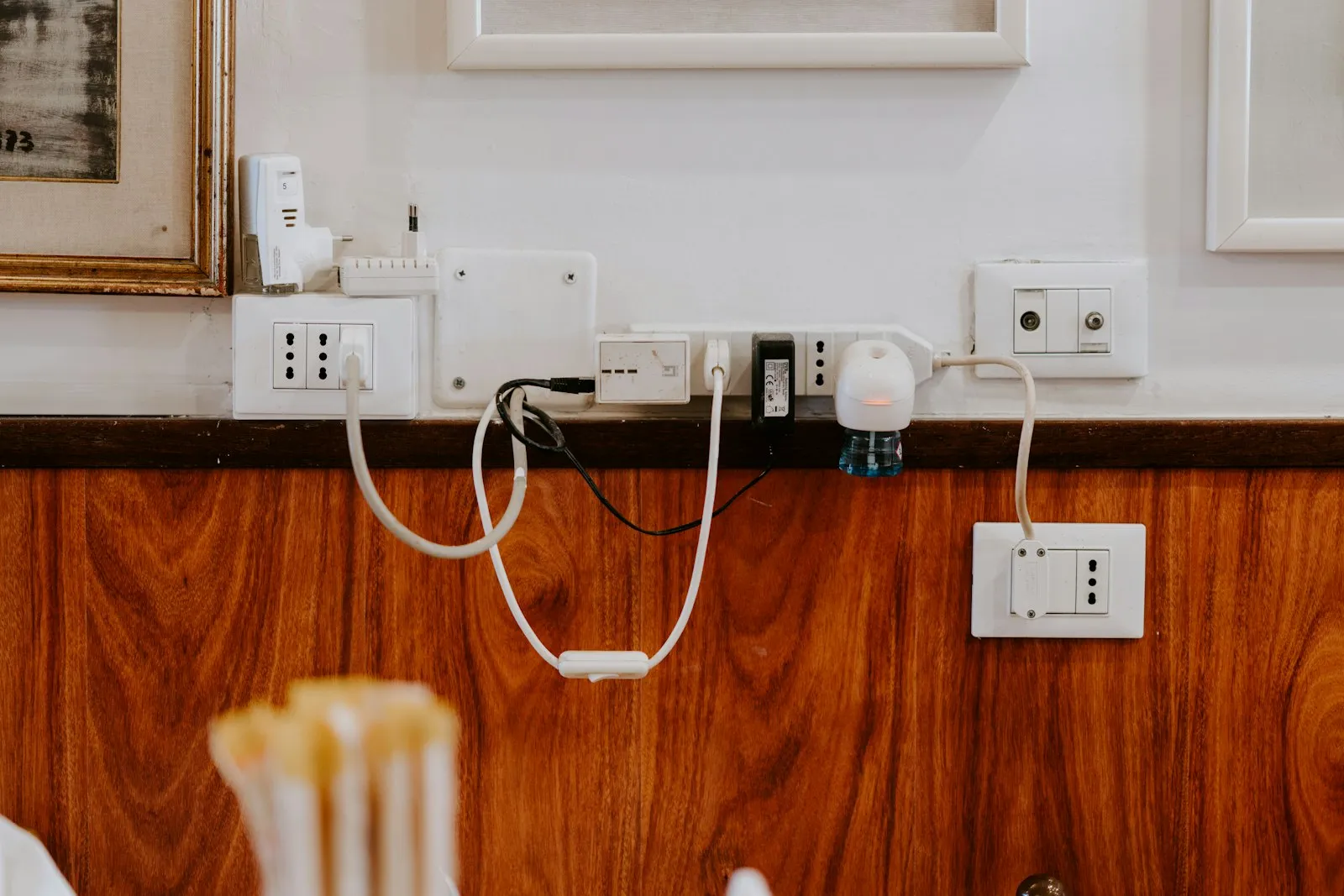
The word transformer covers products with different operating methods and compatibility limits. Selecting one by wattage alone is not enough.
Nissyo, a Japanese transformer manufacturer, distinguishes conventional transformer-type units from electronic converters. Its technical guide says electronic models are intended for heating appliances and cannot be used with products that have microcomputers, digital displays, or electronic controls. Its list of products that cannot use an electronic transformer explicitly includes rice cookers. The same page warns that an undersized transformer may overheat, smoke, or break.
Yazawa’s technical guide reaches the same practical conclusion. It says electronic transformers cannot be used with temperature-controlled heating products or precision electronics. Under cases where an appliance may not work even after the correct electronic transformer is chosen, it leads with appliances that have LCD displays, including electronic hot-water pots, microwave ovens, and electronic rice cookers. Yazawa also lists rice cookers among examples that cannot use an electronic transformer.
Both companies publish a 1.25-times capacity rule for longer continuous operation, but with different time thresholds: Nissyo applies it to use of one hour or more for its products, while Yazawa applies it to use of 30 minutes or more. That difference is why the number should not be turned into a universal shopping formula. More importantly, meeting a capacity calculation would not override the appliance maker’s warning or make an electronic transformer compatible with a rice cooker.
This article therefore does not recommend a transformer size or model. If someone is evaluating specialized electrical equipment for an appliance they already own, the compatibility decision needs written confirmation from the rice-cooker manufacturer and the transformer manufacturer for the exact model combination—not a generic wattage match from a marketplace listing.
Sources: Nissyo transformer guide (Japanese only), Yazawa transformer guide (Japanese only) (all accessed 10 August 2026).
Why a Panasonic “tourist model” did not solve the US problem
Panasonic’s FAQ points overseas users toward tourist models, but the official tourist rice-cooker page we checked did not show a US-voltage option. Every voltage listing on that page was 220V. The SSS185 and SSS105 were listed at 220V and 1,400W or 1,210W; the SAT182 and SAT102 were also listed at 220V and the same respective power levels. No 110V or 120V listing appeared on the page at the time checked.
That does not prove Panasonic has never made a 120V rice cooker. It means the tourist models on the official page we verified were intended for 220V markets and were not a solution for a standard US 120V supply. “Overseas model” is not the same as “US model”; the rating label still has to match the destination country.
Sources: Panasonic tourist rice cookers (Japanese only) (accessed 10 August 2026).
What to check before buying a rice cooker in Japan
A rice cooker in a Japanese electronics store may look attractive because of its menu options, compact size, or Japan-only finish. Before paying, check the appliance rather than relying on the store category or the plug shape.
- Read the rating label. Look for the input voltage and frequency. A label that says only AC 100V is a Japan-market specification, even if the plug physically fits a US outlet.
- Find the official manual for the exact model. Search the model number and confirm whether the manufacturer permits use outside Japan.
- Check warranty geography. Panasonic says overseas use of its domestic rice cookers is outside the warranty. Tiger’s manual says after-sales service is unavailable abroad, and Zojirushi’s shared caution says the same for the appliance covered by that notice.
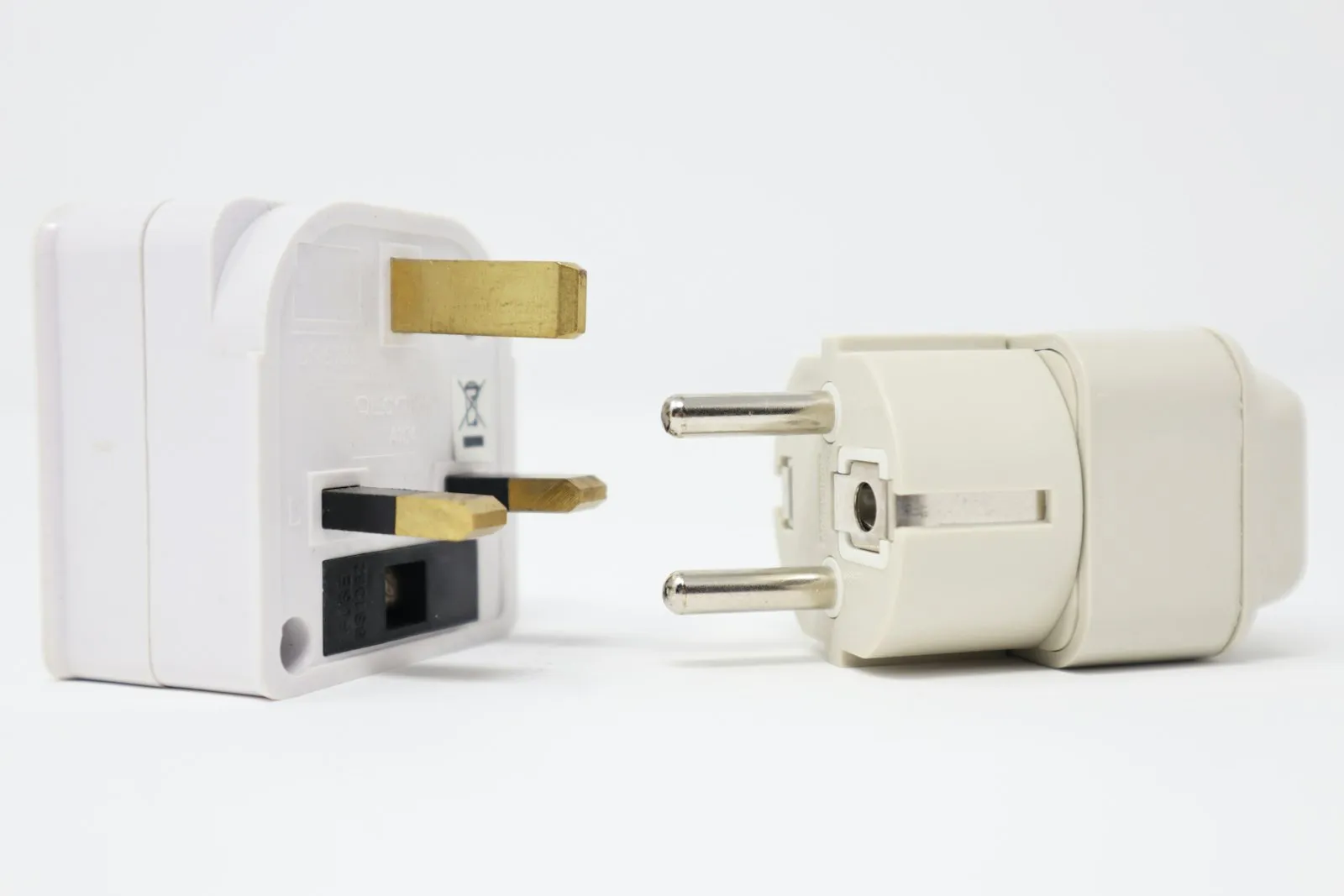
- Do not substitute a travel adapter for voltage conversion. A plug adapter only changes the physical connection.
- Treat “overseas” as incomplete information. Confirm 120V/60Hz rather than assuming an export or tourist model is made for the United States.
- Prefer a US-market listing backed by a US manual. The model number, rating label, manual, and warranty region should all point to the same market.
If shopping during a Japan trip, online access helps with model-number and manual checks while standing in the store. Our Japan eSIM comparison explains the data plans and limits to check before departure. For a Japanese item that does not create a voltage-compatibility problem, our Japanese chef-knife guide covers steel, blade shape, and maintenance—although airline baggage rules still need to be checked separately.
What if you already brought a 100V cooker home?
Do not treat successful operation for a few minutes—or even several cooking cycles—as proof that the setup is approved. The official guidance is about the appliance’s design conditions, warranty, and serviceability, not merely whether the display turns on.
Start with the model’s rating label and official manual. If it is marked only for 100V domestic use, the conservative choice is to stop using it on a US outlet and ask the manufacturer whether that exact model has an approved US configuration. If the answer is no, replacing it with a 120V US-market model avoids depending on an unsupported electrical arrangement and preserves access to the service channel stated for that market.
The same distinction matters when importing other Japanese goods. A shelf-stable subscription box, for example, has shipping and customs questions rather than voltage compatibility; our comparison of Bokksu, Sakuraco, and TokyoTreat covers that separate set of tradeoffs.
FAQ
Can I use a Japanese 100V rice cooker in a US outlet with only a plug adapter? No. A plug adapter changes the physical plug connection but does not convert 120V to 100V. Japan-market manuals reviewed for this guide restrict the appliances to 100V, and the makers warn against use under different voltage conditions.
Will a step-down transformer make a Japanese rice cooker safe in the US? Do not assume so. Panasonic says that even with a transformer, its domestic rice cooker may suffer microcomputer malfunction or failure. Nissyo and Yazawa also list rice cookers among appliances that cannot use electronic transformers, so compatibility cannot be established from voltage and wattage alone.
Is the 50Hz/60Hz difference the main issue? Not for the Tiger example reviewed here, which is labeled 100V, 50–60Hz. The unresolved mismatch in the United States is the 100V appliance rating versus the 120V design and test context used for US household products.
Can I buy a Panasonic tourist rice cooker for use in the United States? The official tourist-model page checked for this article showed 220V models, not 110V or 120V models. Check the exact rating label rather than relying on the word “tourist” or “overseas.”
What should I buy instead? Look for a rice cooker whose rating label and official manual specify 120V/60Hz for the US market. Also verify that the warranty and after-sales support apply in the United States before ordering.
Summary
A Japanese domestic rice cooker labeled 100V is not a plug-and-play appliance for a US 120V outlet. Panasonic discourages overseas use and warns that a transformer may still cause malfunction or failure; Tiger’s rice-cooker manual says its 100V model cannot be used under different voltage or frequency requirements and has no overseas service. Zojirushi publishes a similar 100V-only caution for a Japan-market appliance, but the verified source was not specific to rice cookers.
A transformer is not a blanket fix. Transformer manufacturers themselves exclude rice cookers from electronic-transformer use, and capacity guidance does not cancel the rice-cooker maker’s restrictions. Panasonic’s tourist rice cookers were also 220V on the page checked, so they did not match the US supply.
For US use, the clearest path is a US-market model explicitly labeled 120V/60Hz, supported by a matching official manual and US warranty terms. That may mean giving up a Japan-only model, but it avoids turning a daily high-power kitchen appliance into an unsupported electrical experiment.