Pocket WiFi vs eSIM in Japan: Where the Break-Even Is

This article contains affiliate links. If you buy through them, we may earn a commission at no extra cost to you. Ad revenue can influence which products we cover, but the comparison criteria and verdicts are decided independently from official specs and published sources. Read our full disclosure.
For one traveler, an eSIM is usually cheaper and simpler. For two or more travelers following the same itinerary, one pocket WiFi can cost less than buying a separate eSIM for every phone. That is the basic break-even — but it is only the start of the decision.
A shared router has to stay charged, stay with the group, and be returned. An eSIM gives each traveler an independent connection, but every compatible phone needs its own plan. The useful comparison is therefore not “Which one has the lower advertised daily rate?” It is the total trip cost divided by the number of people who can actually use the connection without disrupting the trip.
This guide uses official provider terms rather than hands-on testing. Official pricing could be verified for two pocket WiFi operators: one short-term rental and one monthly service aimed at longer stays. Prices from Ninja WiFi and TownWiFi are excluded because their official pages could not be accessed for this comparison.
Verdict
Traveling alone, buy an eSIM. On the seven-day prices recorded on July 27, 2026, one unlimited eSIM cost $25.00 to $27.50, below the $36.40 that Japan Wireless’s advertised $5.20-per-day floor works out to over the same week — and there is no router to collect, charge or return.
Traveling with others on one itinerary, get the router quote before buying separate plans. At that advertised floor, a single pocket WiFi at $36.40 already undercuts two unlimited eSIMs at $50.00 to $55.00, and the per-person gap widens with each extra traveler.
The crossover is a calculation, not a fixed party size, and a “from” rate is not a quote: divide the rental total by trip days and by the number of people sharing it, then compare that with each traveler’s plan price divided by trip days. Then answer what the arithmetic cannot — will the group reliably stay together? Only the person carrying the router keeps the connection.

The short answer
Choose an eSIM when traveling alone, when the group regularly splits up, or when avoiding airport pickup and return logistics matters more than squeezing out the lowest shared cost.
Choose pocket WiFi when several people stay together most of the day, when phones do not support eSIM, or when the group needs to connect laptops and tablets without buying several separate plans.
The sticker-price crossover can happen as soon as the second traveler in a seven-day example. It can also move to three or more travelers if the actual router quote is higher than its advertised starting rate, if a low-cost fixed-data eSIM is enough, or if separate connections are worth paying for. There is no universal party-size answer.
Seven-day cost example: do the arithmetic before booking
The cleanest way to see the break-even is to use one trip length and show every step.
The Japan eSIM plan comparison recorded three seven-day unlimited-plan prices on July 27, 2026: Ubigi at $25, Airalo at $27, and Holafly at $27.50. That works out to:
- $25 ÷ 7 days = $3.57 per traveler per day
- $27 ÷ 7 days = $3.86 per traveler per day
- $27.50 ÷ 7 days = $3.93 per traveler per day
Japan Wireless advertises pocket WiFi starting at $5.20 per day. At that advertised floor:
- $5.20 × 7 days = $36.40 for the router
The word “starting” matters. The company does not state on its main page which rental length receives that exact rate, so $36.40 is an illustration based on the advertised floor, not a confirmed seven-day quote.
| Party size | Separate eSIMs for 7 days | Pocket WiFi at the advertised floor | What the math says |
|---|---|---|---|
| 1 traveler | $25.00–$27.50 total ($3.57–$3.93/day) | $36.40 total ($5.20/day) | eSIM costs less |
| 2 travelers | $50.00–$55.00 total | $36.40 total ($2.60/person/day) | shared WiFi costs less at this floor |
| 3 travelers | $75.00–$82.50 total | $36.40 total ($1.73/person/day) | shared WiFi widens the sticker-price gap |
| 4 travelers | $100.00–$110.00 total | $36.40 total ($1.30/person/day) | shared WiFi has the lowest group cost in this example |
This table is not a recommendation to buy the router for every two-person trip. It shows the price crossover under one specific set of assumptions: all travelers buy individual seven-day unlimited eSIMs, the router is available at $5.20 per day, and the group is comfortable sharing one connection.
Change any of those assumptions and the answer can change. A light-data plan may make two eSIMs cheaper. A higher router quote may push the crossover to a larger group. Travelers who separate after breakfast may decide that paying an extra $15 or $20 for independent service is worthwhile.
Use this formula with your actual quote
Provider landing pages make unlike products look comparable. One may display a daily rate, another a total seven-day price, and another a monthly charge in yen. Put them on the same basis before deciding.
For pocket WiFi:
Router cost per person per day = total rental quote ÷ trip days ÷ number of people sharing it
For individual eSIMs:
eSIM cost per person per day = one person’s plan price ÷ trip days
For a group total, multiply the individual eSIM price by the number of travelers who need service. Then add any activation, delivery, insurance, late-return, foreign-transaction, or currency-conversion costs that apply.
Do not compare a router’s “from” rate with an eSIM’s final checkout total. Get the router quote for the exact pickup and return dates first. Also compare data terms, not only labels: the word “unlimited” can sit on top of very different full-speed allowances. The detailed differences are maintained in the comparison of Japan eSIM data and fair-use terms rather than duplicated here.

Where pocket WiFi earns its extra logistics
Pocket WiFi is a small battery-powered router. Phones, tablets, and laptops connect to it over Wi-Fi, so the connected devices do not need eSIM support. That makes it useful for an older phone, a Wi-Fi-only tablet, or a work laptop that needs connectivity between hotels.
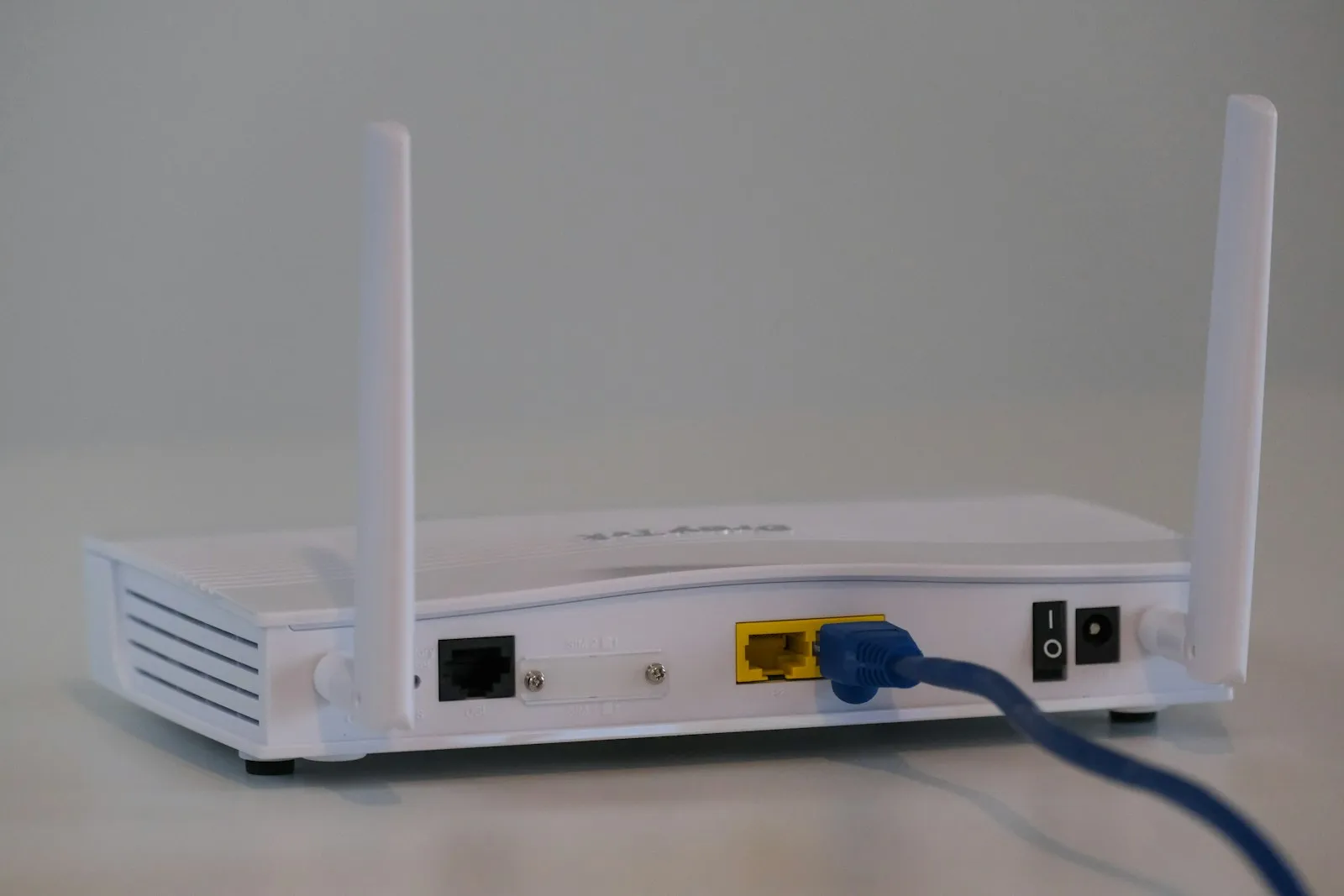
Japan Wireless advertises unlimited data without a fair-use cap or artificial throttling. It also offers airport pickup or delivery and provides a prepaid envelope for return through a postbox in Japan. Those features solve two common rental problems: getting the device at the beginning of the trip and finding a return counter at the end.
The return deadline is described inconsistently on the company’s own page, so this article does not give a specific cutoff time. Follow the instructions in the order confirmation and return materials. A late return can incur a charge, and loss or damage can trigger a replacement fee when protection was not purchased.
The larger tradeoff is not the envelope. It is group geography. One router works well while everyone is on the same train, in the same rental car, or walking through the same neighborhood. It works poorly when one person visits a museum, another goes shopping, and a third heads back to the hotel. Whoever carries the router keeps the connection.
That matters during shopping as well as navigation. If one traveler is checking knife-shop hours in Kappabashi while another is elsewhere translating product labels, separate service is more useful than a shared router. The Japanese chef knife buyer’s guide explains the steel and handle terms likely to appear on those labels.
Where an eSIM earns its higher group cost
An eSIM removes the physical handoff. There is no router to collect, charge, carry, insure, or return. Each person keeps maps, messaging, translation, and transit information when the group separates.
That independence is the main reason a pair may still choose two eSIMs even when the table above favors one router on price. The extra cost is buying two separate connections rather than one shared connection.
An eSIM also avoids another battery in the day bag. Heavy navigation and photo use already drain a phone; a pocket router adds a second device that must stay charged. A dead router disconnects the whole group at once, while a dead phone only disconnects its owner.
The constraints are straightforward:
- The phone must support eSIM and be carrier-unlocked.
- The plan should be installed on a stable connection before departure.
- Typical travel eSIMs are data-only, so they do not create a Japanese phone number for conventional calls or SMS.
- Each traveler who needs independent service needs a separate plan.
Tethering can change the math, but it should not be assumed. Provider hotspot terms vary and can change quickly. The four providers’ tethering conditions were not re-verified for this article, so the break-even examples above use one eSIM per traveler and do not depend on sharing an eSIM connection. Check the current provider page before planning to run another phone or laptop through a hotspot.
Long stays are a different comparison
Short-term rental pricing and monthly pocket WiFi service should not be mixed in one table without explaining the activation fee.
Sakura Mobile’s Pocket WiFi page shows monthly long-term plans rather than a daily tourist rental. The verified prices on August 10, 2026 were ¥5,478 per month including tax for 100GB, and ¥7,128 per month including tax for either 200GB or the unlimited plan. The listed activation fee was ¥5,500.
For the first 30 days, that arithmetic becomes:
- 100GB: ¥5,478 + ¥5,500 = ¥10,978, or about ¥366 per day
- 200GB or unlimited: ¥7,128 + ¥5,500 = ¥12,628, or about ¥421 per day
Those figures become more attractive over multiple months because the activation fee is paid at the beginning rather than every month. They should not be converted to dollars here without a dated exchange rate; the card issuer’s rate and foreign-transaction fee can change the result.
For a one- or two-week vacation, compare against a short-term rental quote. For a semester, extended remote-work stay, or temporary move, a monthly plan may be the more relevant product.
Decision guide by travel style
| Travel pattern | Better fit | Why |
|---|---|---|
| Solo trip | eSIM | Usually lower total cost and no pickup or return |
| Couple staying together | Compare both | Pocket WiFi may cross below two unlimited eSIMs, but separate service is more flexible |
| Family sharing one itinerary | Pocket WiFi | One group price can cover several devices |
| Friends who split up | Individual eSIMs | Everyone keeps maps and messaging independently |
| Laptop-heavy work trip | Pocket WiFi or a verified hotspot-capable eSIM | Compare device count, data terms, and current tethering rules |
| Phone without eSIM support | Pocket WiFi | The phone only needs ordinary Wi-Fi |

Practical checks before paying
Check the final quote. A “from” daily rate is a starting point. Enter the actual rental dates, pickup location, protection choice, and return details.
Decide whether the group will separate. Do not save $15 on connectivity and then spend the trip coordinating who carries the router.
Count every device that matters. Phones may be only part of the load. Add laptops, tablets, game systems, and Wi-Fi-only devices before comparing plans.
Read the current data terms. Full-speed allowances, hotspot limits, and network policies can change faster than a travel article. Use the provider’s checkout terms as the final reference.
Plan the return before departure day. A postbox return is convenient, but it remains one more task during airport packing. Keep the return envelope with the passports or other departure documents.
Keep offline backups. Download the hotel address, essential map areas, and train information. This reduces the impact of a depleted battery, an activation problem, or a temporary coverage gap.
If Japanese snacks are part of the shopping list, the comparison of Bokksu, Sakuraco, and TokyoTreat shows how the same products are packaged for delivery after the trip, without using luggage space.
FAQ
Is pocket WiFi cheaper than an eSIM in Japan?
For one traveler, a seven-day eSIM at the prices recorded on July 27, 2026 cost $25 to $27.50, below Japan Wireless’s advertised starting calculation of $36.40 for seven days. For two or more travelers buying separate unlimited eSIMs, one shared router can have the lower group total. The actual answer depends on the final rental quote, data needs, and whether the group stays together.
Can two people share one eSIM instead of renting pocket WiFi?
They may be able to share through a phone hotspot, but provider tethering rules vary by plan and can include separate limits. Because those terms were not re-verified for this article, the cost examples assume one eSIM per traveler. Check the current provider terms before relying on one phone to connect the rest of the group.
Does pocket WiFi give me a Japanese phone number?
No. Pocket WiFi provides an internet connection, not a mobile voice line. Typical travel eSIMs are also data-only. Messaging and app-based calls work over data, but a traveler who specifically needs a Japanese number should compare a voice-capable SIM or eSIM rather than either option in this article.
What happens if the group splits up with one pocket WiFi?
The person carrying the router keeps the connection, while the others need another connection or offline information. For couples or families that stay together, this may be a minor issue. For friends with separate plans during the day, individual eSIMs are usually the more practical setup even when they cost more.
Bottom line
The break-even is a formula, not a fixed number of people. On the seven-day sticker prices used here, one eSIM costs less for a solo traveler, while one pocket WiFi at its advertised starting rate costs less than two separate unlimited eSIMs. That crossover is useful, but it does not settle the decision.
A shared router buys a lower group cost by asking everyone to share one device, one battery, and one location. Individual eSIMs cost more as the party grows, but each traveler keeps an independent connection and avoids pickup and return work.
Get the exact router quote, divide it by the trip length and party size, and compare that result with each traveler’s eSIM cost per day. Then ask one final question: Will the people sharing the router reliably stay together? If the answer is uncertain, the cheaper sticker price may not be the cheaper trip.
Sources: Japan Wireless Pocket WiFi, Sakura Mobile Pocket WiFi, Airalo Japan eSIM, Ubigi Japan Unlimited 7 Days, Holafly eSIM for Japan (all accessed 10 August 2026).