Converting a Foreign Driver's License in Japan: The 2025 Rules

Gaimen kirikae is the procedure for exchanging a valid foreign driver’s license for a Japanese one: the prefectural public safety commission checks your paperwork, verifies that you can actually drive here, and then exempts you from part of the ordinary Japanese driving test. It is not a translation, and for most applicants it is not a formality either.
On 1 October 2025 the procedure became noticeably stricter, and the change came in two separate pieces that are easy to confuse. The document requirement comes from an amendment to the enforcement regulations of the Road Traffic Act, made by Cabinet Office Ordinance No. 81 of 2025, promulgated on 11 September 2025 and effective from 1 October, together with National Public Safety Commission Notification No. 35 of 2025. The tougher knowledge and driving checks come from the National Police Agency’s handling procedure for foreign license affairs — guidance to the prefectural police, not an ordinance.
Verdict
Since 1 October 2025, a foreign applicant has had to attach a certified copy of their Juminhyo — the municipal resident record — carrying the “special notes” that show residence status, period of stay and expiry date. In practice that closes the route to anyone on a short stay, because a visitor has no resident registration to draw a Juminhyo from; the rule is written as a document requirement, not as a ban on tourists. The knowledge check that decides whether you are exempted from Japan’s written test is now 50 questions in 30 minutes, with 45 correct answers required, replacing the old 10 questions with a pass mark of 7.
If your license came from one of the places the prefectural police list as exempt — 28 countries and one region as Tokyo and Osaka published it in August 2026, with the United States limited to seven states — you skip both checks and the job is mostly paperwork. Everyone else takes the knowledge check first, then a driving skill verification scored out of 100 points, with 70 needed to pass.
Plan around the calendar, not the counter. Tokyo says a skill verification slot is usually three to four months after booking, Osaka says only that waits can be long, and your foreign license has to still be valid when you pass.

What changed on 1 October 2025
Two things changed on the same day, from two different legal sources. Keeping them apart matters, because one is a hard document rule and the other is operational guidance that the prefectures apply in their own way.
| What changed | What it means in practice | Where it comes from |
|---|---|---|
| Address and residence confirmation | Applications, renewals and changes of registered details now require a certified copy of the Juminhyo with the special notes for non-Japanese residents | Cabinet Office Ordinance No. 81 of 2025 and National Public Safety Commission Notification No. 35 of 2025 |
| Knowledge and skill verification | The knowledge check went from 10 questions to 50, the pass mark to 45, and the driving course gained tasks with a stricter marking standard | The National Police Agency’s handling procedure for foreign license affairs, issued as a notice to prefectural police |
The Tokyo Metropolitan Police summarise the second half of that change in four lines: illustration-based questions are gone, the question count went from 10 to 50, the pass mark moved from 7 of 10 to 45 of 50, and the check is run once a day, in the afternoon. On the driving side, Tokyo lists the addition of course tasks such as passing a pedestrian crossing, plus a tightening of the marking standard.
Who can apply: the resident-record requirement
The application goes to the public safety commission for the prefecture where you are registered as living, and in practice you deal with a driving license test centre, not a police station.
The 2025 notice tells counter staff to check the attached Juminhyo copy and confirm, among other things, that the period of stay recorded on it has not already expired. If it has, the copy is not accepted as evidence that you fall under the Basic Resident Registration Act. That is the mechanism behind the claim that tourists can no longer convert: the police wrote a rule about a document only registered residents can obtain.
The Tokyo Metropolitan Police set out the practical conditions in English: the copy must be issued within the previous six months, include the special notes, and leave out your My Number, and photocopies are not accepted. The special notes are the fields the licensing authority needs — nationality or region, the date you became a registered foreign resident, your residence status, authorised period of stay, its expiry date, and your residence card number. Special permanent residents have equivalent entries of their own.

There is a narrow exception for people not covered by the Basic Resident Registration Act, such as those with diplomatic or official status. They submit a closed set of documents instead: identification issued by the Ministry of Foreign Affairs, a public document confirming their address, and their passport. The National Police Agency notice calls that list exhaustive rather than illustrative, so a similar-looking document will not do.
You also have to show that you actually used the license where it was issued. The rule is a total of three months or more spent in the issuing country or region after the license was granted, evidenced by entry and exit stamps in your passport or equivalent records.
The knowledge verification is not Japan’s written exam
This trips up most English write-ups. The knowledge verification decides whether your foreign license justifies an exemption; Japan’s written exam is the thing you are being exempted from. Saying the written test got harder in October has it backwards.
The format is fixed: written questions, 50 of them, 30 minutes, and 45 correct answers needed. Since the revised handling procedure took effect, the check also has to be run under exam conditions — in a room only the applicant may enter, seated, with phones and similar devices switched off and put away. It is not something done across the application counter or on a waiting-room bench.
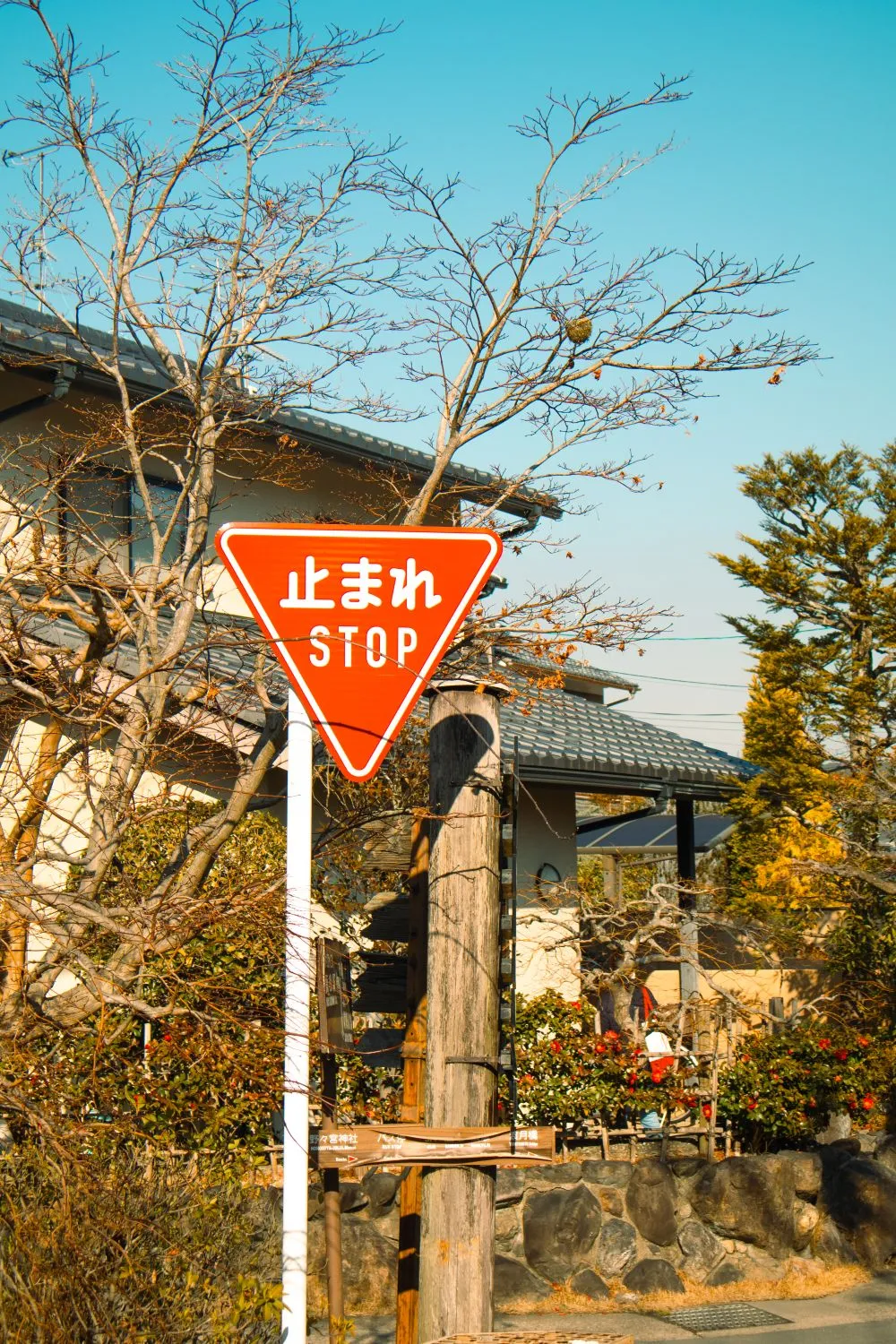
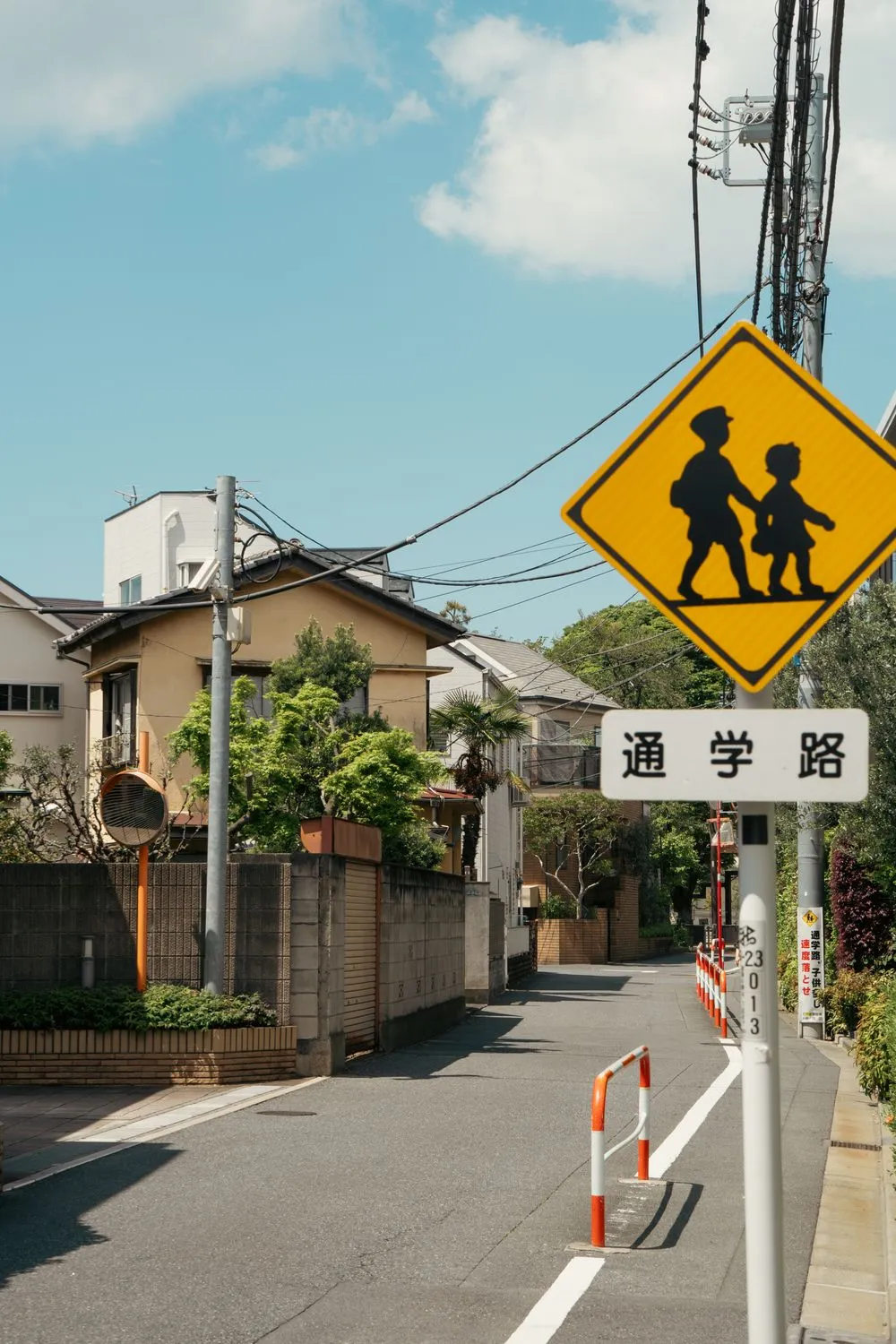
The questions cover Japanese road rules, so twenty years of driving elsewhere is not much protection. Signs, priority and the local conventions around pedestrians and school zones are all fair game, and a pass mark of 45 leaves room for five mistakes.
One piece of good news is buried in the procedure and rarely mentioned in English. If you clear the knowledge questions but score under 70 points on the driving part, then for six months from the date you sat those questions a fresh application can go straight back to the driving part without repeating them. The same treatment can apply if you move to a different prefecture in the meantime.
The driving skill verification
The practical check is scored out of 100 points, and 70 or more earns exemption from both the skill test and the written test. Below 70, nothing is granted and you book again.
What is on the course depends on where you apply. Tokyo describes added tasks such as passing a pedestrian crossing, alongside the tightened marking standard.
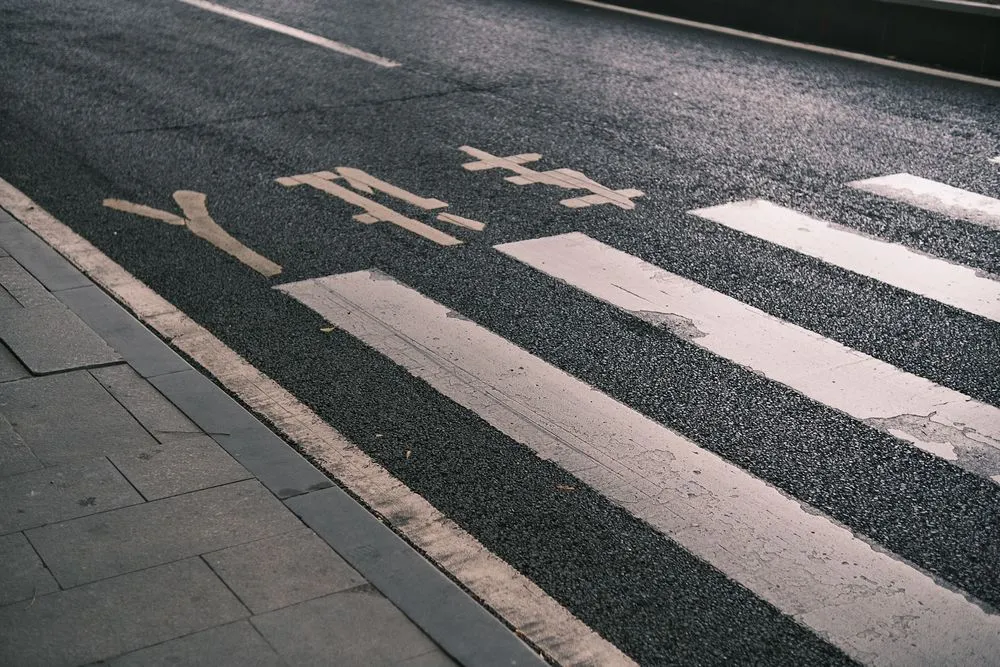
Osaka states that from 1 October 2025 its course was changed, with tasks including a railway crossing and slopes added. Both prefectures are describing the same national tightening, but the published detail is local: read the page for the prefecture where you will actually apply, not a summary written about somewhere else.
Which licenses skip both checks
Some licenses are treated as evidence enough on their own: the holder is exempt from both checks, and the process becomes a document exercise.
| Category | Places listed | Note |
|---|---|---|
| Exempt from both knowledge and skill verification | Iceland, Ireland, the United Kingdom, Italy, Australia, Austria, the Netherlands, Canada, South Korea, Greece, Switzerland, Sweden, Spain, Slovenia, Czechia, Denmark, Germany, New Zealand, Norway, Hungary, Finland, France, Belgium, Poland, Portugal, Monaco, Luxembourg, Taiwan, and the United States limited to Ohio, Oregon, Colorado, Virginia, Hawaii, Maryland and Washington | The Tokyo police English notes count this as 28 countries and one region |
| Exempt from the skill verification only | The United States, limited to Indiana | The knowledge verification still applies |
Two warnings belong next to that table. It is a snapshot: this is what the Tokyo Metropolitan Police and Osaka Prefectural Police both listed as of 12 August 2026, and the two lists matched. More importantly, there is no national published list to check it against — the National Police Agency’s handling procedure defines the exempt group as the countries separately notified by the head of its driver’s license division. The version you can read is the one your own prefectural police publish, so check theirs, with the date, before assuming your state or country is on it.
Documents, fees and the details that catch people out
Beyond the Juminhyo, these are what most often send people home empty-handed.
- A translation from an accepted body only. The issuing country’s embassy or consulate in Japan, JAF, ZIPLUS, the Association for Assisting Drivers Visiting Japan (ALADDIN), the Taiwan-Japan Relations Association for Taiwanese licenses, or ADAC for German ones. The National Police Agency states plainly that sworn translators abroad do not count.
- You must appear in person. Applications through a proxy are not accepted.
- The photo is its own size. 3.0 by 2.4 cm, taken within the previous six months, no hat, front-facing, plain background — not the 4.5 by 3.5 cm photo used for an international permit.
- A digital license alone will not do. The Tokyo police English guidance states that an electronic driver’s license by itself is not acceptable for conversion.
Fees are published per prefecture. Tokyo lists an application fee of 2,500 yen for an ordinary car license plus an issuance fee of 2,350 yen, as of 12 August 2026; the two are published separately, and added together a standard conversion costs 4,850 yen. Other categories differ: 1,600 yen for a moped, 3,900 yen for large, medium and semi-medium licenses.
Where you apply, and how booking really works
This is where prefectures differ most, and where arrangements change without much warning.
| Tokyo (Metropolitan Police) | Osaka (Osaka Prefectural Police) | |
|---|---|---|
| How to book | Online through the Metropolitan Police procedures site; diplomats and Specified Skilled Worker residents book by phone, calling the test centre between 16:00 and 17:00 | By phone as a rule, and only on the designated reception days — every other Friday, between 15:00 and 17:00 |
| Language | Online form; English documents published | Stated as Japanese-language handling only |
| Where | Fuchu and Samezu handle licenses from any country; Koto handles only the exempt list | Split between the Kadoma and Komyoike centres by whether the license is on the exempt list, with part of that arrangement changed in January 2026 |
| Counter hours | Weekdays 8:30 to 15:00, closed 11:00 to 13:00, and closed weekends and public holidays | Reservations cannot be changed once made |
If you are converting in Osaka and your Japanese is limited, the phone call is the hard part, not the driving. Our guide to getting a Japanese phone number rather than a data-only plan explains which lines can make ordinary domestic calls and which cannot.
On waiting times, only one official number exists. The Tokyo police English guidance says a skill verification “will usually be scheduled for a date three (3) to four (4) months away” from booking, and advises renewing a foreign license first if it is close to expiry. Osaka publishes no figure, saying only that applications have risen sharply and the wait for an assigned date can be long, with a separate warning to anyone holding under six months of validity — you have to pass while that license is still valid.
Treat any other month count you read as unsourced. Book early, and keep your foreign license alive.
How this differs from an International Driving Permit
A permit and a conversion solve different problems. The permit, or the foreign license itself where recognised, lets you drive here for a limited window; conversion gives you a Japanese license with no clock on it.
That window is one year from the day you land in Japan, or the remaining validity of the license, whichever ends sooner. The well-travelled tip that a quick trip abroad resets the year does not work for registered residents: the National Police Agency states that where a person on the Basic Resident Register leaves Japan and returns within three months, the date of that return does not restart the driving period.
Length of stay also decides what you may do once you hold a Japanese license. The Tokyo police English notes set out four thresholds: three months or more to convert at all, one year or more to be exempt from displaying the Beginner’s Mark, one year or more to carry a passenger on a motorcycle on ordinary roads, and three years or more to do so on an expressway.
On a short visit none of this applies and the permit route is the right one, with navigation data to arrange: our comparison of eSIM plans for Japan covers that, and the changes to tax-free shopping from November 2026 affect the same trips.
FAQ
Can I convert my license while visiting Japan as a tourist? In practice, no. Since 1 October 2025 the application requires a certified copy of your Juminhyo with the special notes, and a short-term visitor has no resident registration to draw one from. The rule is written as a document requirement rather than a ban on visitors, and a narrow exception covers people outside the Basic Resident Registration Act, such as those with diplomatic status.
How many questions is the knowledge check, and what is the pass mark? Fifty written questions in 30 minutes, with 45 correct answers required. Applicants who reach that mark move on to the driving skill verification; those who do not are refused the partial exemption. The old format was 10 questions with a pass mark of 7.
Which foreign licenses are exempt from the tests? The Tokyo and Osaka police both list 28 countries plus Taiwan, with the United States limited to Ohio, Oregon, Colorado, Virginia, Hawaii, Maryland and Washington. Indiana licenses are exempt from the driving check only. There is no national published list, so verify against your own prefectural police page and note the date.
How long does the whole process take? No authority publishes a national figure. The Tokyo police state that a skill verification slot is usually three to four months from booking; Osaka says only that waits can be long because applications have risen. You must pass while your foreign license is still valid, so renew it before it nears expiry.
What to remember
The 2025 change did not close the door, but it did narrow it. Conversion is now plainly a route for residents, gated by a document only registered residents can obtain, and the exemption check in front of it is a real test rather than a formality.
Three things decide how hard your case will be: whether your license is on your prefecture’s exemption list, whether you can produce a Juminhyo with valid residence status and a translation from an accepted body, and how early you book. The first is out of your hands, the second is a morning at the municipal office, the third is the one people leave too late.
All of the above reflects what the National Police Agency, the Tokyo Metropolitan Police and the Osaka Prefectural Police published as of 12 August 2026. The exemption list and the booking arrangements move most often, so check your prefecture’s page before travelling to a test centre.
Sources: National Police Agency: for holders of a foreign driver’s license, National Police Agency notice on the 2025 amendment (PDF, Japanese), National Police Agency notice revising the handling procedure for foreign licenses (PDF, Japanese), Tokyo Metropolitan Police: converting a foreign license, Tokyo Metropolitan Police: the amendment effective 1 October 2025, Tokyo Metropolitan Police: Required Documents (PDF, English), Tokyo Metropolitan Police: List of Required Documents by Country (PDF, English), Tokyo Metropolitan Police: Notes (PDF, English), Osaka Prefectural Police: converting a foreign license to a Japanese one (all accessed 12 August 2026).