Getting a Japanese Phone Number as a Resident: Voice SIM and the ID Law

A voice SIM is a Japanese mobile line that carries a phone number and ordinary carrier calling — the kind of number beginning 070, 080 or 090 — as opposed to a data-only SIM, which moves internet traffic and nothing else. The difference is not a marketing tier. It decides whether Japanese law obliges the provider to establish who you are before the line is switched on.
For a resident that narrows to one question at checkout: does the company need to see your Residence Card? The honest answer depends less on the plan than on how the SIM reaches your hands.
Verdict
A line with a Japanese phone number falls under the Mobile Phone Improper Use Prevention Act, so the provider must verify your identity before it activates. A data-only SIM sits outside that law entirely, which is why a travel eSIM can be sold online with no document check at all. For someone living here, the Residence Card is what makes the convenient version of that check possible: both providers examined for this guide accept it for online verification, and that is what lets an eSIM QR code or a SIM card come to you instead of you going to it.
It is not an absolute gate. Mobal’s collection points in Japan ask only for the order confirmation and a passport, and Sakura Mobile routes anyone without a registered Japanese address to its airport counters or its Shinjuku office. Without a Residence Card you can still get a Japanese number — you collect it in person.
If you already have a number and are only changing carriers, MNP keeps it. The Ministry of Internal Affairs and Communications is blunt about the trade: the move is a cancellation plus a new contract, so the old line’s plan and discounts end with it.
Why a voice line is checked and a data-only SIM is not
The rule comes from Japanese law rather than company policy, which is why every legitimate provider asks similar questions in a similar order.
The Ministry of Internal Affairs and Communications explains in its Q&A on the Mobile Phone Improper Use Prevention Act (Japanese only) that a data-only SIM falls outside the law because it cannot receive a mobile voice communications service. The same Q&A puts a SIM issued by a foreign operator outside the law as well, where the service is not provided by a Japanese telecommunications carrier. The duty sits with the provider, not with you: the ministry’s guidance for travel businesses handling rental phones states that failing to carry out the required identity check can attract up to two years’ imprisonment or a fine of up to three million yen.
That is why a voice product feels heavier to buy than a tourist data plan.
| Data-only SIM | Voice SIM with a Japanese number | |
|---|---|---|
| Identity check required by the Act | No — the ministry places it outside the law | Yes, before activation |
| Typical purchase | Online, immediate, no documents | Online application plus a document check, or collection in person |
| Native calls to 110 and 119 | IIJmio states its data and SMS SIMs cannot | IIJmio states its voice SIMs can |
| Number portability (MNP) | Not applicable — there is no number | The number can move to a new carrier |
Our companion guide to when a Japanese phone number is worth the trouble at all works through that boundary from a visitor’s point of view. This article picks up where it stops: you live here, you want a number, and the question is what the contract will ask of you.
Does a resident need a Residence Card?
Not always — but without one, the process stops being a website and becomes an errand. What the card buys you is the remote route: an online identity check, followed by delivery or an emailed eSIM profile.
Two providers publish their requirements in English in enough detail to compare, and both split the process the same way.
| Provider | With a registered Japanese address | Without one | Checked on |
|---|---|---|---|
| Mobal | Upload one of: Residence Card (front and back), My Number Card (front only), or a Japanese driver’s license (front and back). Your name and address must match the order, and delivery goes only to the address shown on the ID | Its published answer is to collect the SIM or eSIM on arrival in Japan; the collection points ask for the order confirmation and your passport | 12 August 2026 |
| Sakura Mobile | Residence Card or My Number Card, then a simple online ID verification, after which the eSIM QR code arrives by email or the SIM card by delivery | Verify with your passport, and pick up at an airport counter or the Shinjuku office | 12 August 2026 |
Read the pattern, not the brand names: the split between proving it remotely and showing up in person is the shape the ministry’s rules impose.
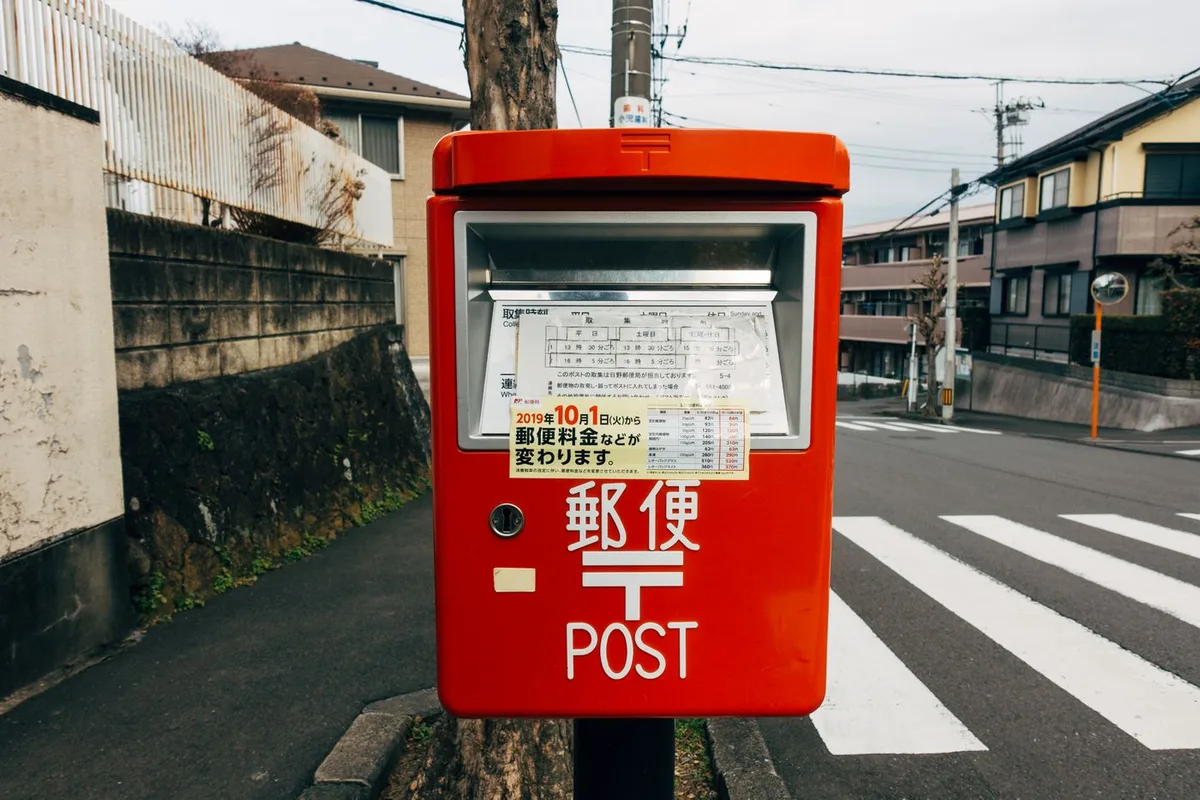
One wrinkle surprises people expecting an ordinary courier. Mobal states that for security reasons voice products cannot be delivered directly to an address in Japan; the order goes to your local post office instead, and you show identification to the delivery person. That matches the ministry’s description of a remote contract verified by sending the device to the address on the identity document by registered, non-forwardable mail. The handover is part of the identity check, not a shipping preference.
Two things follow from that. Your name and address on the order have to match your card exactly, down to how the address is written, and somebody has to be present for a delivery that cannot be left in a locker.
What the two providers publish for a voice plan
The figures below are what each company displayed on its own page on 12 August 2026 — a snapshot, not a ranking.
| Mobal | Sakura Mobile | |
|---|---|---|
| Entry voice plan | Voice Lite: a Japanese number and SMS, 990 yen a month, with 4,950 yen due at checkout | Voice + Data 5 GB: 3,278 yen a month, tax included |
| Larger plans | Voice + Data from 1,650 yen a month | 15 GB 3,828 yen, 40 GB 5,478 yen, 60 GB 7,678 yen, 80 GB 9,878 yen, 100 GB 12,078 yen a month |
| Up-front cost | 4,950 yen due today on Voice Lite; the first month is prorated | Initial fee 5,500 yen, tax included, reduced by 1,100 yen with the student discount |
| How data behaves | Voice Lite allows up to 3 GB a month: the first 500 MB is free, and going past it triggers a flat 2,500 yen charge. Mobal advises turning mobile data off for that SIM | Unused data rolls over automatically to the following month |
| Contract terms shown | No minimum contract; billing in yen | Call charges published with the plans |
| Checked on | 12 August 2026 | 12 August 2026 |
Sakura Mobile publishes call rates on the same page: 16.5 yen per 30 seconds domestically, and international calls from 34.1 yen per 30 seconds, or from 16.5 yen per 30 seconds using its own dialling service.
This is not a value verdict, for two reasons. The products answer different questions — Voice Lite is a number with SMS and a data allowance you are told to switch off, while Sakura Mobile’s entry plan is a voice line with 5 GB attached — and either page can change the week after it was checked. Read the current figures on Mobal’s long-term voice and data page and Sakura Mobile’s voice plan page before committing.
One marketing claim deserves caution. Providers sometimes advertise that a Japanese mobile number will let you open a bank account or rent an apartment. That is the seller’s own wording; this guide found no independent confirmation of how banks or letting agents treat a given provider’s numbers. Ask them, not the SIM company.
Keeping your number when you switch: how MNP works
Number portability, universally called MNP, lets you change carriers and keep the same number. The Ministry of Internal Affairs and Communications describes it as a mechanism for using the new carrier’s service with your existing number, and sets out two ways of doing it.
| Method | What actually happens | In use since |
|---|---|---|
| One-stop | You apply on the new carrier’s site, are passed to your current carrier’s site to log in and receive the required explanation about cancelling, then returned to complete the contract. When the line switches over, the old contract is cancelled automatically | 24 May 2023 |
| Two-stop | You ask your current carrier for an MNP reservation number, receive the advance explanation with it, then apply to the new carrier using that number. The move completes once the new carrier finishes processing | The earlier, conventional route |
The 2023 revision did more than add a method. It made one-stop the general rule, prohibited retention tactics aimed at customers using it, and required the handover to the current carrier to happen sooner. An earlier revision, on 1 April 2021, made MNP fees free as a general rule and banned excessive retention tactics.
The ministry explains the methods but publishes no current list of which carriers support one-stop, so confirm that with the two companies you are actually moving between.
What MNP does not carry across
This is the part that catches people, and it comes straight from the ministry’s own cautions. Legally the move is a cancellation plus a new contract — the number survives, the relationship does not.
- Your plan and its discounts end, including anything grandfathered.
- Content and electronic money may not transfer. Services tied to the old carrier’s account can be lost in the move.
- An annual or term contract may cost you to leave. Cancellation can trigger separate charges where such a discount is in place.
- Your handset has to suit the new network — it must support the new carrier’s frequency bands.
None of that is a reason to stay put. It is a reason to price the move on the total rather than the headline monthly figure, and to settle the band question before the SIM arrives.
Emergency calls follow the line, not the handset
Japan uses 110 for police, 119 for fire and ambulance, and 118 for the Japan Coast Guard. Whether you can reach them depends on what kind of line you hold.
IIJmio’s emergency-call FAQ (Japanese only) states that its voice SIMs can call 110 and 119, and that its data SIMs and SMS SIMs cannot make emergency calls. The same page adds that location information is passed to the emergency service where possible, but that the caller should still state their phone number and exact location out loud.
That is one carrier describing its own products. This guide did not obtain equivalent statements from other providers, and did not establish what happens on a roaming foreign line or a phone with no active SIM — the same limit set out in our guide to Japanese numbers for short trips. Treat it as a general warning rather than a per-provider verdict, and ask your own provider in writing whether your exact plan can place native calls to 110, 119 and 118.
What a voice line actually buys you day to day
A number that only receives verification codes is a different tool from a line that can ring an office at 15:20 on the one afternoon a week that office answers.
Two examples from this site make the point. Osaka’s prefectural police take bookings for converting a foreign driver’s license by telephone, on designated days, within a two-hour window, in Japanese. Sendai’s English waste guide states that its bulky-waste phone line and online application are both Japanese-only — one of several reasons household waste rules differ so much between municipalities. A lot of Japanese administration still assumes a phone call.
If none of your obligations look like that, our comparison of data-only eSIM plans for Japan covers what a connectivity-only line costs instead.
Before you order
Confirm these on the provider’s product page or with support, and save the answers:
- Functions. Does the plan include a Japanese number, incoming and outgoing SMS, and incoming and outgoing carrier voice calls?
- Identity documents. Which documents does this provider accept from a resident, and are front-and-back images required?
- How it is handed over. Delivery to your registered address, a post-office handover, or collection in person — and who has to be present?
- Address matching. Does your order match the identity document exactly as written on it?
- Emergency calls. Does the provider confirm native calls to 110, 119 and 118 on this specific plan?
- Total first payment. Initial fee, first month, activation, and anything prorated.
- Ongoing charges and leaving. Call rates, overage behaviour, minimum term if any, and whether the number can be ported out later.

FAQ
Can I get a Japanese phone number without a Residence Card?
Yes, but the route changes. Mobal’s published answer for customers without valid Japanese ID is to collect the SIM or eSIM in Japan with the order confirmation and a passport, and Sakura Mobile directs anyone without a registered Japanese address to its airport counters or Shinjuku office with a passport. The Residence Card unlocks the remote route: online verification, then delivery or an emailed eSIM profile. Both were checked on 12 August 2026.
Why can’t a voice SIM be couriered straight to my apartment?
Because the handover is part of the identity check, not a delivery preference. Mobal states that voice products cannot be delivered directly to an address in Japan for security reasons and are routed through your local post office, where you show identification to the delivery person. That mirrors the ministry’s description of remote contracting, which relies on registered, non-forwardable mail sent to the address on the identity document.
Does an eSIM skip the identity check?
No. The Act draws its line at whether the service can carry mobile voice communications, not at whether the SIM is a physical card. An eSIM with a Japanese number is a voice line and is verified like one; a data-only eSIM sits outside the law in either form. The convenience is in activation, not in paperwork.
Will MNP move my current plan and discounts to the new carrier?
No. The ministry describes the move as cancelling the old contract and signing a new one, with only the number carried across. Your plan and its discounts end, content or electronic money tied to the old carrier may not transfer, a term discount may trigger a separate charge on cancellation, and your handset has to support the new carrier’s bands.
What to remember
The law asks for identity verification, not for a specific card. That distinction is the whole article: a voice line is checked because it can make calls, a data-only line is not because it cannot, and the Residence Card matters because it lets the check happen at a screen instead of at a counter. Without one you are not locked out — you are booking a trip to a pickup point.
The rest is ordinary contract hygiene. Read the current price page rather than any figure quoted here, and ask what the plan does about 110 before you need to know.
Sources: Ministry of Internal Affairs and Communications: Q&A on the Mobile Phone Improper Use Prevention Act (Japanese), Ministry of Internal Affairs and Communications: guidance for travel businesses handling mobile phones (Japanese), Ministry of Internal Affairs and Communications: mobile number portability (Japanese), Mobal: long-term voice and data plans, Sakura Mobile: monthly voice plans, IIJmio: emergency-call FAQ (Japanese) (all accessed 12 August 2026).